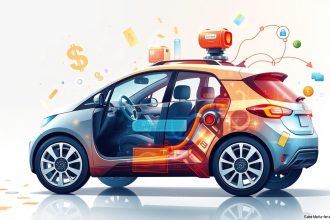

Shaping the Future of Driving
The automotive landscape is experiencing a seismic shift, largely driven by the advent of advanced driver assistance systems (ADAS). These innovative technologies represent a significant leap forward in not only enhancing vehicle safety but also redefining the overall driving experience. The growing integration of sophisticated systems into modern vehicles marks the beginning of a new era of mobility, where safety and convenience go hand in hand.
Among the most notable features of ADAS are:
- Adaptive Cruise Control: This system allows vehicles to automatically adjust their speed to maintain a safe distance from the car in front. It’s particularly beneficial during long highway drives, reducing driver fatigue by taking over the constant speed adjustments needed in traffic.
- Lane Departure Warning: With this feature, vehicles monitor lane markings and alert drivers if they begin to drift without signaling. This helps to prevent unintended lane changes, particularly during long trips or while driving at night when fatigue might set in.
- Automatic Emergency Braking: In situations where a collision appears imminent, this system can engage the brakes automatically to either prevent an accident or lessen its severity. For example, studies show that this technology can decrease rear-end collisions significantly, contributing to safer roadways.
These are just some of the foundational elements of ADAS, paving the way for further advancements. With the incorporation of artificial intelligence and machine learning, these systems are evolving incredibly quickly. These technologies enable vehicles to learn and adapt to various driving conditions, thereby enhancing their efficacy in accident prevention. For instance, AI algorithms can analyze data from thousands of driving scenarios to improve decision-making processes in real-time.
The push toward greater autonomy is especially prominent in the United States, where major automotive manufacturers are actively testing self-driving technologies on public roads. The merger of real-time data processing with advanced sensor technologies—such as LiDAR, cameras, and radar—has led to remarkable improvements in vehicle perception and situational awareness. These advancements are not just about making driving safer, but also about providing a more enjoyable and convenient experience for users.
As we move forward, it is essential to acknowledge the impact of driver assistance systems not only on individual safety but also on societal norms regarding travel and mobility. Enhanced safety features are projected to reduce the overall number of traffic incidents, which can lead to lower insurance premiums and decreased healthcare costs associated with traffic accidents. The repercussions extend beyond just personal vehicles; public transportation and commercial fleets are also poised to benefit from these advancements.
In the following sections, we will delve deeper into the rich history of driver assistance systems, explore their current applications, and speculate on their future trajectory. Join us on this insightful journey as we uncover how these innovations are set to shape the roads of tomorrow.
DISCOVER MORE: Click here to find out which eco-friendly car suits you best
From Concept to Reality: The Journey of Driver Assistance Systems
The story of driver assistance systems (ADAS) is one of innovation and relentless pursuit of safety. What began as a mere concept has transformed into a sophisticated array of applications that permeate the driving experience. The advent of these technologies can be traced back to the late 20th century when automakers began experimenting with basic systems, like cruise control. However, the real transformation began in the early 2000s, as technological breakthroughs in sensors, data processing, and connectivity began to enable a wider scope of possibilities.
In the early days of ADAS, systems were relatively limited in functionality and were primarily designed for crash avoidance. This initial focus ushered in features such as collision warning systems and basic stability control. Fast forward to today, and we see that the landscape has changed dramatically. The convergence of artificial intelligence, machine learning, and the Internet of Things (IoT) is giving rise to increasingly intelligent systems capable of deeper understanding and interaction with their environments.
One of the most critical components of this evolution is the usage of advanced sensor technologies. Vehicles are now equipped with an array of sensors including LiDAR, ultrasonic sensors, cameras, and radar systems. Each plays a pivotal role in enhancing the vehicle’s perception, making it aware of its surroundings, objects, and even potential hazards. For instance, LiDAR, which stands for Light Detection and Ranging, uses laser light to create high-resolution maps of the surroundings, empowering vehicles to navigate complex environments autonomously.
This sophisticated sensor suite supports various advanced functionalities that work in concert to create a safer driving experience. Consider the following applications:
- Blind Spot Detection: Utilizes sensors to monitor areas that are not visible to the driver, alerting them when another vehicle enters their blind spot.
- Traffic Jam Assist: Combines adaptive cruise control and lane-keeping assist to handle stop-and-go traffic situations, allowing the vehicle to manage speed and steering automatically.
- Parking Assistance: Uses cameras and ultrasonic sensors to perform parallel and perpendicular parking maneuvers, often with minimal driver involvement.
As these systems become more commonplace, the implications for safety and efficiency become increasingly significant. According to the National Highway Traffic Safety Administration (NHTSA), implementing these systems can substantially mitigate traffic accidents, which remain a leading cause of injury and mortality in the United States. Moreover, the ongoing advancements in connectivity allow vehicles to communicate with each other and with traffic infrastructure, paving the way for even greater improvements in safety and traffic flow.
Looking beyond individual vehicles, the evolution of driver assistance systems is set to reshape urban planning and vehicular regulations. As safety improves and congestion declines, city planners may embrace the innovations of ADAS to advocate for smarter traffic management solutions. The integration of these technologies into public transport and logistics can further amplify their potential benefits, ultimately transforming the mobility landscape for communities across the nation.
Clearly, the future of driving is inextricably linked to the trajectory of driver assistance systems. The ongoing research and development in this domain promise enhancements that are already actively reshaping how we think about driving.
| Category 1 | Category 2 |
|---|---|
| Safety Features | Enhanced safety through systems like Automatic Emergency Braking and Lane Keep Assistance. |
| User Convenience | Features such as Adaptive Cruise Control reduce driving fatigue, making travel more comfortable. |
As we continue to explore the remarkable evolution of driver assistance systems, it’s imperative to understand how these technologies integrate into our daily driving experiences, setting the stage for greater advancements. The use of sensor technology coupled with advanced algorithms allows vehicles to perceive their surroundings in real-time. For instance, vehicles equipped with 360-degree camera systems provide unparalleled visibility to drivers, reducing blind spots and enhancing parking safety.Moreover, advancements in artificial intelligence are revolutionizing systems like Adaptive Cruise Control. Bridging the gap between manual driving and automation, these features learn from driver behavior patterns, adjusting speed seamlessly according to traffic conditions. This reduces driver fatigue and elevates the overall travel experience.With an increasing focus on connected vehicles, Vehicle-to-Everything (V2X) communication is becoming a game-changer, enabling cars to exchange crucial information with infrastructure, fellow drivers, and pedestrians. Such innovations are paving the way for the future of smart cities and integrated transport systems, enhancing mobility in increasingly congested urban landscapes.As these technologies continue to advance, we inch closer to a reality where driving becomes not only safer but also more efficient, highlighting the indispensable role of driver assistance systems in the evolution of the automotive landscape.
CHECK OUT: Click here to get seasonal maintenance tips!
The Road Ahead: Innovations Driving ADAS Forward
As the development of driver assistance systems (ADAS) accelerates, several key innovations are positioned to further enhance the safety and convenience of our driving experiences. At the forefront of this evolution is the integration of Artificial Intelligence (AI) and machine learning, which enable vehicles to learn from their environments and improve their responses over time. By leveraging vast amounts of data collected from various driving scenarios, these systems can anticipate potential hazards and adjust their functionalities accordingly, creating a more intuitive driving experience.
One of the most promising advancements lies in the realm of Vehicle-to-Everything (V2X) communication. This technology enables vehicles to communicate with each other, as well as with traffic signals, road infrastructure, and even pedestrians. By sharing real-time data, such as traffic conditions, road hazards, and speed limits, V2X aims to reduce accidents and optimize traffic flow significantly. For example, a vehicle could receive alerts about an impending traffic jam or an accident further down the road, allowing the driver to take alternate routes proactively.
Moreover, the emergence of automated driving technologies is further challenging traditional concepts of mobility. Levels of automation, as categorically defined by SAE International, range from Level 0 (no automation) to Level 5 (full automation). Currently, most vehicles incorporate features that facilitate partial automation—think of adaptive cruise control and lane-keeping assistance. However, as more advanced systems are perfected, we inch closer to the day when fully autonomous vehicles will navigate seamlessly without requiring human intervention.
The burgeoning market for electric vehicles (EVs) is also contributing to the evolution of ADAS. EVs are typically equipped with advanced technology and state-of-the-art sensors, making them ideal platforms for the implementation of driver assistance features. In tandem, charging infrastructure equipped with smart technology can communicate with vehicles to provide efficient and timely updates about charging options, helping to ease range anxiety for drivers.
This synergy of ADAS with electric and autonomous vehicles is also fostering an environment ripe for policy development and regulatory alignment. For instance, as these vehicles begin to populate the roads, it becomes essential to create new guidelines and regulations that ensure safety and performance. US regulators are now tasked with addressing the complexities brought about by these technologies, including liability issues in case of accidents involving autonomous vehicles.
Consumer acceptance and education also play a critical role in the widespread adoption of these technologies. As automakers roll out vehicles equipped with advanced ADAS features, it becomes imperative for them to clearly communicate the advantages and limitations of such systems to consumers. Educational campaigns and real-world demonstrations can help demystify these advancements, building trust and encouraging more drivers to embrace the new technologies.
The evolution of driver assistance systems represents a vast and ongoing transformation in the automotive industry, promising not only to change how we drive but also to redefine our relationship with our vehicles. As these advancements continue to mature, we can anticipate a future where driving becomes safer, more efficient, and increasingly automated.
DON’T MISS: Click here for essential seasonal maintenance tips
Conclusion: Embracing the Future of Driving with ADAS
As we stand on the brink of a new era in automotive innovation, the evolution of driver assistance systems (ADAS) heralds profound changes in our driving experiences. With the integration of Artificial Intelligence and innovative technologies like Vehicle-to-Everything (V2X) communication, we are moving towards a future where vehicles are not just modes of transport but intelligent entities that can anticipate and react to a dynamic environment. This transition promises to fundamentally enhance safety, efficiency, and connectivity on our roads.
Moreover, the push towards fully autonomous vehicles and the rise of electric vehicles (EVs) further enrich the landscape of transportation technology. The amalgamation of electric mobility with sophisticated driver assistance systems will not only alleviate concerns related to range anxiety but also optimize energy consumption through smart charging solutions. Regulatory frameworks are bound to evolve in tandem, addressing the complexities of safety, liability, and infrastructure as we embrace these revolutionary technologies.
However, achieving successful consumer adoption hinges on educational outreach and transparent communication from automakers. It’s essential for consumers to understand the capabilities and limitations of these emerging systems to foster trust and embrace new technologies confidently. Ultimately, the evolution of ADAS will redefine the relationship between driver and machine, propelling us toward an age where driving is safer and more enjoyable.
As we look ahead, the potential of ADAS to reshape our roads cannot be understated. With continued advancements on the horizon, now is the time for stakeholders across the automotive spectrum—from manufacturers to policymakers and consumers—to collaborate in realizing a future where technology elevates the driving experience to unprecedented heights.