
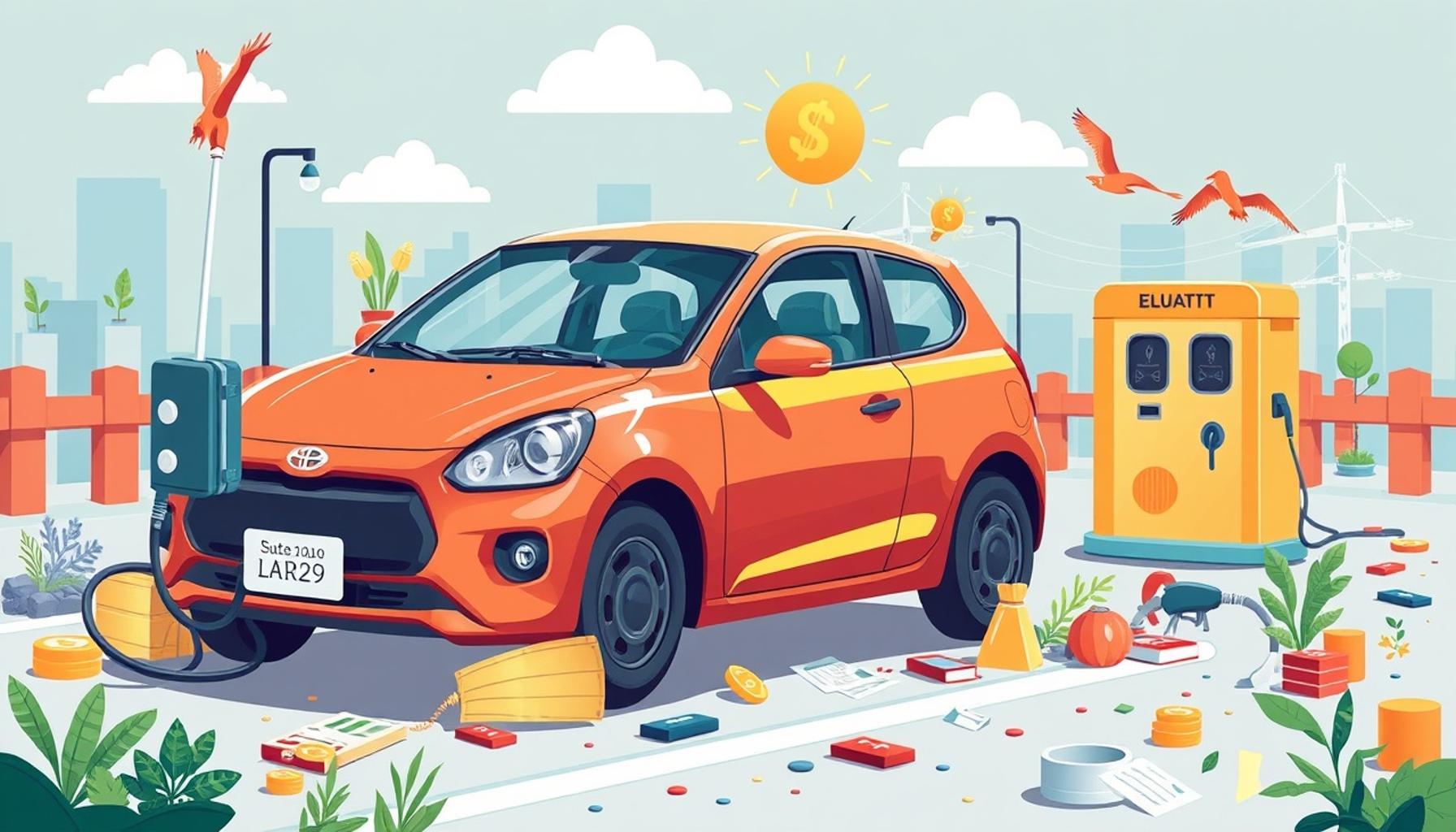
The Future of Electric Vehicles and Charging Infrastructure
Electric vehicles (EVs) are rapidly transforming the automotive landscape in the USA. As we enter a new era of transportation, one crucial factor influencing this shift is the charging infrastructure. Without sufficient and reliable charging options, potential EV owners may hesitate to make the leap to electric, opting instead for traditional gasoline-powered vehicles. The expansion of charging facilities across the nation is essential to support the growing demand for EVs and to alleviate consumer concerns about range anxiety.
As of now, the USA boasts over 100,000 charging stations, but is this number sufficient? To evaluate this, we must consider several key factors:
- Accessibility: Charging stations are predominantly found in urban areas, where the infrastructure supports a denser population of EV users. Rural regions often lack adequate access, creating a disparity that could hinder EV adoption outside of metropolitan centers. For instance, while cities like San Francisco and New York offer numerous charging options, less populated states like Wyoming may have considerably fewer stations, complicating electric travel for those in remote areas.
- Charging Speed: The time required to charge an EV varies significantly depending on the type of charger used. Fast charging stations can restore battery life to 80% in under 30 minutes, making them ideal for long-distance travel. In contrast, standard Level 2 chargers can take several hours to fully charge a vehicle, which can be inconvenient for travelers looking to minimize downtime. This discrepancy illustrates the importance of expanding the fast-charging network to encourage EV usage during longer trips.
- Cost of Installation: The expansion of charging infrastructure is not merely a logistical challenge; it also requires substantial investments from both public and private sectors. Government incentives and subsidies can stimulate the construction of new stations, while collaborations with businesses can lead to charging options at commercial locations such as shopping centers and parking garages. For example, in 2021, several states initiated grant programs aimed at bolstering charging station availability across their jurisdictions.
Research indicates that a well-developed charging network is linked to higher EV adoption rates. States like California have exemplified this trend, experiencing soaring electric vehicle sales that are largely attributed to their robust and expansive charging infrastructure. In fact, nearly 60% of all EVs sold in the United States are registered in California, highlighting the correlation between infrastructure investments and consumer behavior.
As policymakers, automotive manufacturers, and technology companies collaborate to enhance our EV charging options, a critical question emerges: What role does infrastructure play in shaping consumer behavior? Understanding this dynamic not only provides insight into the factors influencing EV adoption but also delineates the pathway forward for electric mobility in the United States. Continual advancements in charging technology, accessibility improvements, and financial support for infrastructure projects will be vital in steering the future of transportation towards an environmentally sustainable and innovative horizon.
DISCOVER MORE: Click here to learn about the latest in driver assistance technology
Accessibility and Its Role in EV Adoption
The presence of charging stations plays a pivotal role in the overall adoption rates of electric vehicles across the USA. As it stands, the current landscape highlights a crucial imbalance: while metropolitan areas enjoy a network of charging facilities, rural regions often find themselves with limited options. This geographical disparity profoundly influences potential buyers’ decisions to transition from gasoline vehicles to electric. A comprehensive analysis reveals that a vast majority of charging stations are concentrated in urban hubs like Los Angeles, Chicago, and Seattle. In contrast, states like Montana and Vermont grapple with a scarcity of charging points, which could deter interested consumers in those areas.
Moreover, the location of charging stations is as critical as their number. A well-placed charging network encourages usage by making it convenient for everyday charging needs. For instance, charging facilities near popular destinations such as shopping malls, workplaces, or major highways significantly enhance the user experience. As consumers grow more accustomed to seeing chargers as commonplace—similar to gas stations—the hesitation to switch to EVs diminishes. In states that have prioritized the development of charging infrastructure, such as California and New York, we witness a direct correlation with rising electric vehicle registrations.
Charging Speed and Its Impact on User Behavior
The types of chargers available also play a significant role in shaping consumer responses. There are primarily three levels of chargers, categorized by their charging speed:
- Level 1 Chargers: These chargers provide a standard 120-volt outlet and are generally the slowest. They can take up to 20 hours to fully charge an EV, making them less suitable for public charging environments.
- Level 2 Chargers: Offering 240 volts, these chargers reduce charging time considerably—typically requiring 4 to 8 hours to replenish an EV’s battery. They are widely utilized in residential settings and commercial charging stations.
- DC Fast Chargers: The fastest option, these chargers can restore about 80% of battery life in roughly 30 minutes. Their strategic placement along highways is essential for long-distance journeys and enhances consumer confidence in EV capabilities.
The disparity in charging speeds highlights another layer of complexity. While slow charging can work for overnight home charging, consumers seeking to travel longer distances are likely to look for fast charging options to minimize travel disruption. In response, industry advocates are calling for increased investments in fast-charging infrastructure, particularly in rural areas, to bridge the gaps in accessibility. As infrastructure improves, consumers are more inclined to embrace electric vehicles, confident that their long-distance travel plans can be seamlessly accommodated.
In conclusion, while EV adoption is on the rise across the USA, the current state of charging infrastructure presents both challenges and opportunities. Addressing accessibility, strategically placing charging stations, and enhancing charging speeds can significantly influence consumer behavior towards electric vehicles. As these infrastructure improvements unfold, they will undoubtedly serve as a catalyst for greater electrification of the nation’s automotive market.
The Impact of Charging Infrastructure on Electric Vehicle Adoption in the USA
The growth of electric vehicles (EVs) in the United States is undeniably linked to the development of adequate charging infrastructure. Increasing the number of charging stations is essential to alleviate the “range anxiety” that potential EV buyers often experience. This anxiety stems from concerns about running out of battery power far from a charging station. A robust charging network not only enhances consumer confidence but also plays a crucial role in the evolution of urban planning and energy distribution.Accessibility and Convenience are paramount when it comes to encouraging widespread EV adoption. As state governments and private companies invest in charging infrastructure, they create more convenient options for EV owners. This includes fast chargers strategically located along highways and urban centers, making long road trips feasible. As of 2023, many metropolitan areas report a significant decrease in range anxiety incidents, as the average distance between EV charging stations has diminished considerably.Moreover, electric vehicle adoption is also propelled by a growing emphasis on sustainability and environmental consciousness. Consumers are becoming increasingly aware of the environmental impacts of traditional fuel sources. With charging stations powered by renewable energy sources like solar and wind, the overall carbon footprint of electric vehicles is significantly lower than that of conventional vehicles. This synergy between green energy production and electric mobility further enhances the appeal of EVs among eco-conscious consumers.As more individuals and organizations recognize the role of convenient charging solutions in enhancing EV adoption, we can anticipate even further incentives, such as government subsidies and rebates for installing home charging stations. This evolving landscape not only benefits the individuals making the switch but also contributes to a larger shift towards sustainable transportation solutions across the nation.
| Advantages of Charging Infrastructure | Impact on EV Adoption |
|---|---|
| Increased Accessibility | The more charging stations available, the less range anxiety consumers feel. |
| Support for Renewable Energy | The integration of charging stations powered by clean energy sources enhances the environmental benefits of EVs. |
As the charging infrastructure continually evolves and expands, it paves the way for a future where electric vehicle adoption becomes commonplace across the United States, ultimately leading to reduced emissions and a more sustainable society.
DISCOVER MORE: Click here to learn about the evolution of luxury vehicles
Public vs. Private Charging Initiatives
The competition between public and private charging initiatives further shapes the landscape of electric vehicle (EV) adoption across the United States. Public charging infrastructure is typically funded by government initiatives and agencies aiming to reduce greenhouse gas emissions and promote renewable energy. In this context, numerous states have launched programs utilizing federal funds to install charging stations in high-traffic areas. For instance, the Bipartisan Infrastructure Law allocates $7.5 billion to expand a nationwide network of EV chargers, emphasizing the federal government’s commitment to diversifying energy sources and reducing reliance on fossil fuels.
On the other hand, private companies are stepping in to bolster charging infrastructure as well. Companies like Tesla have installed their proprietary Supercharger networks, aimed at enabling long-distance travel specific to their electric vehicles. Meanwhile, conglomerates like ChargePoint and Electrify America are expanding public charging stations in various regions, making substantial investments to develop infrastructure that meets consumer needs. Their extensive networks promise fast charging and enhanced accessibility, serving both urban centers and remote locations.
However, fragmentation in charging networks can lead to user confusion. With different networks operating unique payment structures, charging styles, and apps, potential EV users may feel overwhelmed. The industry is starting to recognize the necessity of interoperability among charging stations, as consumers express frustration when encountering compatibility issues. When stakeholders prioritize consistent user experience, it can dissolve hurdles and encourage further EV adoption.
The Role of Government Policy and Incentives
The importance of government policy in shaping charging infrastructure cannot be overstated. Various states have introduced incentives for businesses that install charging stations, providing tax rebates and credits as a means to accelerate infrastructure development. For example, California’s “Charge Ahead California” initiative has proven successful in placing chargers in low-income communities while incentivizing installations at commercial properties.
In addition to incentives, regulatory frameworks will play a crucial role in outlining where and how charging stations can be built. For instance, some states have mandated that new residential and commercial buildings include charging stations, enhancing accessibility where it is needed most. Furthermore, local governments can champion the development of “charging deserts” to tackle gaps in current infrastructures, allowing for widespread adoption.
- Data from the Department of Energy indicates that, as of 2022, there were over 140,000 public charging outlets available across the U.S., but this number must increase substantially for EV adoption rates to rise significantly.
- Research shows that consumers are often willing to pay for charging stations in their communities, highlighting the economic potential of local charging businesses.
Overall, both public and private entities are key players in pushing forward the charging infrastructure landscape, but coordination among various stakeholders is essential to streamline efforts and realize a more extensive and efficient network. Only through cohesive strategies that include robust government policies, private investment, and consumer engagement will the challenge of charging infrastructure be met, ultimately leading to increased electric vehicle adoption throughout the United States.
DISCOVER MORE: Click here to learn about the latest innovations in electric vehicles
Conclusion
As we have explored, charging infrastructure plays a pivotal role in determining the pace of electric vehicle (EV) adoption across the United States. The interplay between public and private charging initiatives reveals a landscape characterized by both promise and challenges. While government initiatives, reinforced by significant funding from laws like the Bipartisan Infrastructure Law, aim to create a cohesive network of charging stations, private sector investments help enhance accessibility and cater to consumer needs. Together, they are vital in constructing a framework that ensures consumers feel empowered to make the transition to electric mobility.
However, for this infrastructure to be truly transformative, it is fundamental that efforts are unified. The fragmentation of charging networks can deter prospective EV owners, highlighting the necessity for standardization and interoperability among various systems. Moreover, innovative policies and incentives will continue to shape how and where charging stations are implemented, particularly in underserved areas known as “charging deserts.” As more Americans consider making the switch to electric, the availability and convenience of charging stations will significantly influence their decisions.
In summary, the journey toward widespread EV adoption hinges not only on robust charging infrastructure but also on coordinated efforts among all stakeholders. By fostering a seamless and accessible charging experience, adopting forward-looking policies, and incentivizing infrastructure development, the United States can pave the way for a cleaner, more sustainable transportation future. The path is clear: to realize the potential of electric vehicles, we must empower consumers through strategic and inclusive charging solutions.