

The Challenge of Focus in a Distracted Era
In today’s fast-paced society, the pursuit of sustained concentration is hindered by a plethora of external stimuli vying for our attention. With smartphones buzzing, emails piling up, and social media constantly calling out for interaction, the quest for deep work has become increasingly complicated. This phenomenon, once a hallmark of productivity in both professional and academic settings, is now at risk of becoming a rare ability. As outlined by the productivity expert Cal Newport, the art of deep work is critical for succeeding in an economy where complex problem-solving and creative solutions are essential.
Strategic Approaches to Boost Focus
Implementing effective strategies for habit building can empower individuals to regain control over their focus. Let’s explore some actionable elements in more detail:
- Establishing a Routine: Creating a consistent daily schedule allows individuals to streamline their mental processes. For instance, setting specific hours dedicated solely to deep work can eliminate decision fatigue, as the mind becomes conditioned to focus during these time blocks. Many successful professionals, such as tech entrepreneurs and writers, have attributed their achievements to meticulous routines that foster high concentration levels.
- Setting Clear Goals: Clearly defining objectives for each focused work session helps to steer efforts and measure progress. Specific targets may include completing a certain number of pages of writing, coding a particular feature, or preparing for an important meeting. By framing these goals using the SMART criteria—Specific, Measurable, Achievable, Relevant, and Time-bound—individuals can enhance their focus and stay motivated throughout their tasks.
- Minimizing Distractions: Identifying interruptions before they disrupt deep work is essential. This might involve creating a “do not disturb” environment by using noise-canceling headphones, silencing notifications on devices, or designating a separate workspace free from clutter. Moreover, experiments indicate that even brief interruptions can significantly reduce one’s ability to concentrate, thus making environment optimization particularly vital.
Furthermore, research supports the notion that individuals working in environments that are tailored for deep work not only demonstrate improved productivity but also foster greater creativity. For example, many technology companies in Silicon Valley encourage the use of quiet spaces and provide amenities like meditation rooms to allow employees time for uninterrupted thought.
Integrating Strategies Across Various Workplaces
The integration of these approaches can differ, especially when considering the diverse work environments prevalent in the United States—ranging from remote home offices to bustling corporate spaces. For remote workers, setting boundaries, like designating specific work hours, can drastically reduce family-related distractions. On the other hand, organizations can promote deep work by implementing policies that encourage “focus hours” during which meetings and distractions are kept to a minimum.
The exploration of habit-building and the principles of deep work opens doors to innovative practices that could redefine productivity in a distracted world. As individuals cultivate these techniques, the path toward reclaiming focus may become clearer, enabling everyone to unlock their full potential.


DISCOVER MORE: Click here to delve into the evolution of productivity tools
Harnessing the Power of Habit for Enhanced Focus
To thrive in a world filled with distractions, the cultivation of effective habits becomes paramount. Habit building is not merely about performing tasks repetitively; it is about creating a framework that encourages sustained focus and productivity. Experts in psychology emphasize that habits form the bedrock of our daily routines, influencing our mindsets and ultimately determining the success of our endeavors. In particular, the link between deep work—the ability to engage in cognitively demanding tasks without interruption—and habit formation is profound. Through strategic integration of productive habits into daily life, individuals can reclaim their attention and elevate their work quality.
The Science of Habit Formation
Understanding the mechanics of habit formation can significantly impact one’s ability to maintain focus. According to Charles Duhigg, author of *The Power of Habit*, the process is governed by a simple loop: cue, routine, and reward. Each time you encounter a cue, your brain initiates a routine, which is followed by a reward reinforcing the behavior. Here’s how to apply this framework to enhance focus and productivity:
- Identify Cues: Cues can be environmental factors, emotional states, or specific times of the day that trigger the habit. For example, if you notice that you concentrate best in the early morning, then schedule your deep work sessions during this prime time.
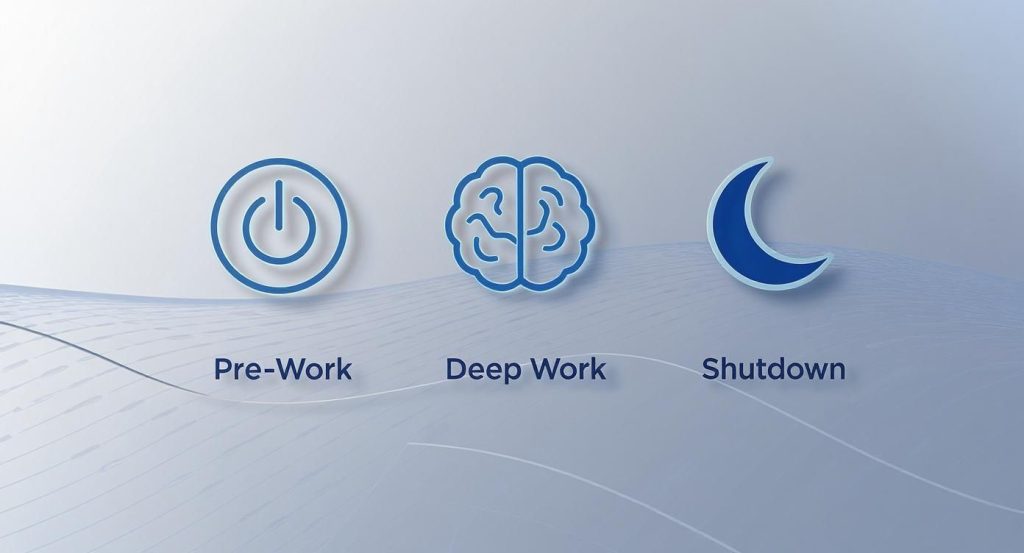
- Create Supportive Routines: Use the identified cues to establish routines that are conducive to focused work. This might involve a pre-work ritual, such as meditation or review of goals, that signals to your brain that it’s time to enter a deep work state.
- Acknowledge Rewards: After completing a deep work session, ensure there is a reward, such as a break, a walk, or a small treat. This practice helps reinforce the positive feelings associated with productive work, ensuring the routine becomes ingrained.
Studies have shown that consistently utilizing this habit loop not only fosters productivity but also enhances overall well-being. The brain thrives on the structure and predictability of habits, reducing the cognitive load associated with decision-making processes. Over time, as these habits solidify, the ability to engage in deep work becomes more instinctual, transforming challenging tasks into manageable endeavors.
The Role of Environment in Habit Building
Perhaps one of the most crucial aspects of facilitating effective habit development is creating a work environment that aligns with your productivity goals. Research illustrates that environmental design—the way we organize our physical spaces—has a significant impact on our ability to focus. Consider implementing the following adjustments to your workspace:
- Declutter: A tidy workspace minimizes distractions. Keeping essential tools and materials within reach while eliminating unnecessary clutter can heighten concentration.
- Optimize for Comfort: The setup of your workstation contributes to your focus. Invest in ergonomic furniture that allows you to work comfortably for extended periods.
- Incorporate Natural Elements: Studies have shown that exposure to natural light and greenery positively affects mood and concentration. If possible, position your workspace near a window or introduce plants to foster a more productive environment.
By understanding the dynamics of habit formation and strategically tailoring your environment, you can significantly enhance your ability to maintain focus in a distracted world. As you embark on this journey of habit building, the integration of deep work principles will not only maximize productivity but also pave the way for innovative thinking and creative breakthroughs.
| Advantage | Description |
|---|---|
| Enhanced Concentration | Engaging in deep work allows individuals to significantly enhance their concentration levels, reducing mental fatigue and increasing productivity. |
| Habit Formation | By establishing a routine around habit building, individuals can create lasting changes in their focus patterns, leading to sustained attention over time. |
| Improved Quality of Work | The outcome of consistent deep work is a higher quality of output, as detailed focus fosters creativity and critical thinking. |
| Increased Satisfaction | Participants in such focused work regimes often report higher job satisfaction due to a greater sense of accomplishment and clarity in their tasks. |
Implementing these strategies can transform the way individuals approach their work and personal projects, emphasizing the importance of focus and discipline in a world filled with distractions. By consciously choosing to engage in deep work while simultaneously building productive habits, one can navigate through distractions effectively and attain a more fulfilling and productive life. Discovering methods such as time blocking, setting specific goals, and prioritizing tasks can also serve as foundational steps towards achieving these advantages. Study your methods, adjust when necessary, and ensure to create an environment that is conducive to deep work for optimal results.
DIVE DEEPER: Click here to discover how structured goal setting can elevate your performance
Strategic Techniques for Cultivating Deep Work
Adopting a habit of deep work requires more than simply trying to focus; it necessitates deliberate strategies and techniques that encourage immersion in tasks without giving in to the temptations of distraction. One such approach involves employing the Pomodoro Technique, a time management method devised by Francesco Cirillo in the late 1980s. This technique breaks work into intervals, traditionally 25 minutes in length, separated by short breaks. The intervals, known as “Pomodoros,” foster intense concentration and, importantly, maintain high energy levels. This method not only prevents burnout but also makes daunting tasks seem more achievable because they can be tackled incrementally.
Moreover, another effective strategy is the concept of time blocking, where you designate specific blocks of time in your calendar for different activities. By visually structuring your day, you can eliminate ambiguity regarding when to engage in deep work. Consider blocking out several hours at a stretch for crucial tasks, ensuring that your calendar reflects these high-priority sessions prominently. This technique not only preserves uninterrupted time for focused work but also establishes accountability in meeting personal deadlines.
Leveraging Technology Wisely
While technology often distracts us, it can also be an ally in the pursuit of deep work and productive habits. Several applications are designed specifically to enhance focus and mitigate distractions. For example, apps like Forest and Freedom are geared towards blocking distracting websites, allowing users to maintain their concentration while digitally detoxing for specific periods. Furthermore, tools like Todoist and Notion facilitate organization and task management, making it simpler to prioritize deep work assignments and see progress over time.
Additionally, consider the use of the two-minute rule, introduced by productivity expert David Allen in his bestselling book *Getting Things Done*. The essence of this rule is that if a task takes less than two minutes to complete, do it immediately to avoid accumulation. This simple habit can prevent clutter in your task management system and free up cognitive bandwidth for deeper work.
Mindfulness and Mental Conditioning
Emphasizing mental well-being is crucial for enhancing focus. Practicing mindfulness meditation has gained traction as a proven method for improving attention and processing speed. A study by neuroscientists at Harvard showed that just a few weeks of mindfulness training can actually change brain structure, increasing the thickness of the prefrontal cortex, responsible for higher-level thinking and decision-making. Consider integrating regular mindfulness sessions into your routine to train your brain for better concentration and resilience against distractions.
Finally, one of the most significant components of fostering strong habits around deep work is establishing accountability. Whether through a mentor, a colleague, or a productivity group, sharing your goals with others can create a sense of obligation and support. Regular check-ins and progress tracking not only reinforce your commitment but also provide motivation and encouragement, helping to solidify the habit of focusing deeply in a world rife with distractions.
By implementing these strategies—integrating time management techniques, leveraging technology responsibly, practicing mindfulness, and establishing accountability—you are poised to create an ecosystem that supports deep work and enhances your ability to maintain focus amidst the chaos of modern life.
DISCOVER MORE: Click here to learn about maximizing your effectiveness
Conclusion: Mastering Focus in a Distracted World
In an age where distractions lurk at every corner, the ability to engage in deep work is not just a luxury; it is an essential skill for success. By understanding and implementing targeted strategies for habit building, you unlock the potential to reclaim your focus and significantly enhance productivity. Techniques such as the Pomodoro Technique and time blocking serve as powerful frameworks that can reshape your relationship with time and tasks, allowing you to create a structured environment that favors concentration over chaos.
Furthermore, leveraging technology effectively can transform these distractions into tools for enhanced productivity. Using applications designed to support focus can create a productive environment that fosters deep engagements with your work. The addition of mindfulness practices helps not only in conditioning the mind for sustained attention but also in promoting resilience against the barrage of modern-day interruptions.
Ultimately, cultivating an ecosystem that prioritizes deep work is not a one-time achievement but a continuous journey. Establishing accountability through social connections and community support can significantly empower you to stay committed to your goals. As you integrate these strategies into your daily routine, you are not just opting for efficiency; you are making a commitment to greater creativity, deeper understanding, and the valuable work that will define your personal and professional life. Prepare to embrace this disciplined approach, and watch how your capacity for focused work transforms your productivity and enriches your life.