
The Importance of Effective Prioritization
In an age characterized by constant notifications from emails, social media, and various applications, the challenge of maintaining focus and productivity is greater than ever. This is where the Eisenhower Matrix comes into play. Originally designed by President Dwight D. Eisenhower for military and governmental decisions, this matrix serves as a practical framework for categorizing tasks and optimizing time management in both personal and professional settings.
Underpinning the effectiveness of the Eisenhower Matrix is the fundamental distinction it draws between tasks that are urgent and those that are important. Urgent tasks require immediate action, while important tasks are those that help achieve long-term goals and contribute significantly to overall success. This differentiation is critical for prioritization, ensuring that individuals are not merely reacting to the demands of the day but are instead proactively managing their time.
Understanding the Quadrants
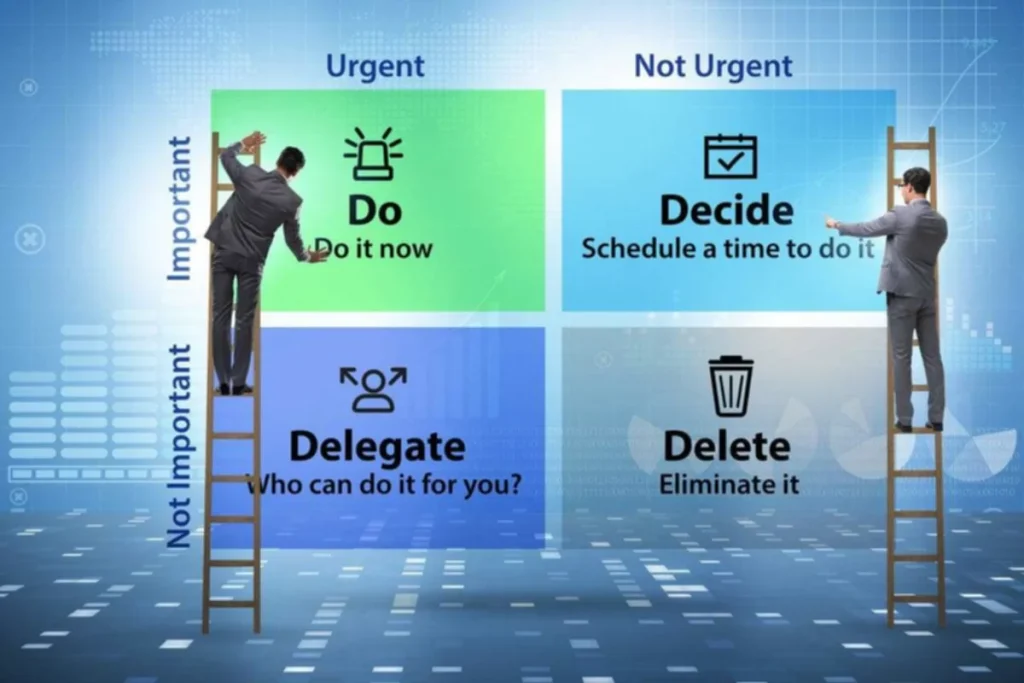
The Eisenhower Matrix is divided into four quadrants, each serving a specific purpose:
- Quadrant 1: Urgent and Important – Tasks in this quadrant require immediate attention and are crucial for your immediate goals. An example would be a pressing work deadline or a crisis situation.
- Quadrant 2: Important but Not Urgent – This quadrant focuses on tasks that contribute to long-term development, such as strategic planning or personal growth activities like learning a new skill.
- Quadrant 3: Urgent but Not Important – These tasks tend to be distractions. Responding to non-critical emails or attending certain meetings might fall here. It is essential to delegate or minimize time spent on these tasks.
- Quadrant 4: Neither Urgent nor Important – Tasks that fall into this quadrant are time-wasters, such as excessive social media browsing. Recognizing these tasks helps in eliminating them from your day-to-day routine.
Leveraging Digital Tools
Incorporating digital tools such as task management apps (like Trello or Asana) enables users to apply the Eisenhower Matrix efficiently. These tools allow for flexible categorization of tasks, reminders for deadlines, and collaborative features for team projects, making prioritization a more streamlined and less overwhelming process.
The adaptability of these tools promotes a structured workflow, allowing for real-time adjustments as priorities shift. For instance, an unexpected work assignment can quickly be reevaluated and placed into the appropriate quadrant of the matrix, preventing disruption to overall productivity. Consequently, this empowers professionals to maintain clarity in their tasks, essential for achieving a balanced work-life dynamic.


Conclusion
In conclusion, as individuals grapple with increasing workloads and external distractions, the application of the Eisenhower Matrix becomes not just a strategy, but a necessity. By mastering this method of prioritization, one can unlock new levels of productivity and decisively navigate the complexities of both personal and professional responsibilities. Ready to delve deeper into the nuances of effective task management? The journey to mastering productivity awaits.
EXPLORE MORE: Click here to learn how to enhance your performance and quality of life</
Maximizing Productivity Through Effective Task Management
Understanding and implementing the Eisenhower Matrix is not just about drawing lines and categorizing tasks; it’s about fundamentally changing how we approach our daily responsibilities. In the fast-paced environment that defines the modern workplace, prioritization is essential. As the line between work and home life blurs, especially with the proliferation of remote working, the ability to manage time efficiently has become more critical than ever.
The essence of the Eisenhower Matrix lies in its straightforward yet powerful framework that encourages individuals to sift through their tasks and determine their true impact on personal and professional objectives. By making the distinction between the urgent and the important, users can focus more on what yields significant results rather than what simply demands attention in the moment. This shift in mindset can dramatically enhance productivity and foster a sense of control over one’s workload.
How to Apply the Eisenhower Matrix in Daily Life
To effectively utilize the Eisenhower Matrix, consider employing the following steps that can lead to improved prioritization and task tracking:
- Start with a Brain Dump – Take a few moments each day or week to list all the tasks currently on your plate. This exercise clears mental clutter and provides a comprehensive view of what needs to be done.
- Categorize Your Tasks – Divide your tasks into the four quadrants of the Eisenhower Matrix. Which tasks are urgent and important? Which can be scheduled later, delegated, or eliminated altogether?
- Review Regularly – Situations change, and so do priorities. Regularly reviewing and adjusting the quadrants as new tasks emerge or as projects progress helps maintain order.
- Leverage Technology – Utilize apps like Trello, Notion, or Todoist to facilitate the evaluation and management of tasks. Digital tools provide reminders, progress tracking, and even collaboration features that enhance workflow.
By following these steps, individuals can begin to regain control over their schedules and ensure that they are not merely reacting to the urgent demands of the day, but strategically prioritizing tasks that align with their larger goals. Implementing such practices can transform how one approaches both work and personal endeavors.
The Role of Digitalization in Prioritization
The digital age poses unique challenges to maintaining focus, as notifications and distractions are incessant. However, it also offers innovative solutions to these challenges. The integration of the Eisenhower Matrix within task management software allows users to visualize their priorities vividly. For instance, digital boards can show a clear layout of which tasks are immediate, helping to reduce the cognitive overload often associated with a growing to-do list.
Moreover, the ability to set deadlines and reminders within these digital frameworks ensures that nothing crucial slips through the cracks. As professionals in the United States increasingly rely on technology to enhance productivity, it becomes imperative to adopt strategies that not only prioritize tasks effectively but also accommodate a digital-first approach.
| Advantage | Description |
|---|---|
| Enhanced Decision-Making | Utilizing the Eisenhower Matrix promotes clearer decision-making by categorizing tasks based on urgency and importance. |
| Increased Productivity | By focusing on high-impact tasks, individuals can boost their efficiency and accomplish more in less time. |
| Effective Time Management | The matrix helps prioritize daily activities, ensuring that valuable time is devoted to critical tasks. |
| Adaptability to Digital Tools | Integrating the matrix with digital task management tools allows for seamless updates and tracking of progress in real time. |
The Eisenhower Matrix serves as a pivotal framework in the quest for productivity in the digital realm. It categorizes tasks into four quadrants: urgent and important, important but not urgent, urgent but not important, and neither urgent nor important. This systematic approach allows individuals to discern which tasks demand immediate attention and which can be delegated or postponed. Moreover, in today’s fast-paced work environment, digital tools such as apps and software can enhance the application of the Eisenhower Matrix. These tools not only simplify the process of task categorization but also allow for easy tracking of progress, making it an essential strategy for effective workflow management. Embracing such methodologies is crucial for professionals aiming to optimize their performance and streamline daily activities effectively.
DIVE DEEPER: Click here to enhance your productivity
Enhancing Collaboration Through Digital Tools
Another significant advantage of employing the Eisenhower Matrix in the digital age is its ability to foster collaboration among team members. Traditional task management often leads to silos, where team leaders and members operate independently, often with differing understandings of priorities. By integrating the Eisenhower Matrix into collaborative tools such as Asana, Microsoft Teams, and Slack, everyone is on the same page regarding what tasks are urgent and important.
These platforms often allow teams to label and color-code tasks according to the Eisenhower categories. This clarity not only streamlines communication but also nurtures accountability. Team members can easily see what they are responsible for, as well as track the progress of tasks assigned to them or their colleagues. By visualizing where each team member’s efforts align with the overall goals of the project, organizations can foster a more engaged and unified workforce.
The Impact of Real-Time Data and Analytics
The digital age also introduces the concept of real-time data and analytics, which can significantly enhance how we utilize the Eisenhower Matrix. Many task management applications come equipped with analytics features that provide insights into how well tasks are being prioritized and executed. For instance, organizations can analyze which tasks consistently fall into the ‘urgent’ category, providing an opportunity to recalibrate workflows or offer training to team members who may be struggling with task management.
Moreover, this analytical approach can identify patterns in productivity, allowing for improved resource allocation. If certain types of tasks are often neglected or result in last-minute chaos, it’s essential to recognize such trends and address them proactively instead of reactively. Leveraging tools that capture this data enables organizations to refine their approach continuously, ensuring a more efficient workflow overall.
Overcoming Procrastination with Digital Reminders
The battle with procrastination is a daily struggle for many professionals, especially in today’s distraction-laden environment. However, integrating the Eisenhower Matrix into digital task management platforms provides built-in solutions to combat this issue. Setting reminders for tasks categorized as urgent and important helps create a sense of urgency, triggering immediate action. Features such as recurring notifications and scheduled prompts remind users to focus on their most critical tasks, preventing important work from being derailed by distractions.
For example, if a project deadline is approaching, a reminder can help keep that task front and center, enabling timely completion. Additionally, many apps allow users to break down larger tasks into smaller, manageable sub-tasks, making it easier to tackle complex projects without feeling overwhelmed. This granular approach keeps users motivated and less likely to avoid essential work.
Integrating the Eisenhower Matrix with Other Productivity Frameworks
Lastly, in a world abundant with productivity frameworks, the Eisenhower Matrix can be effectively married with other popular methodologies such as Agile, SCRUM, or the Pomodoro Technique. By incorporating elements of the Eisenhower Matrix with these frameworks, teams can develop robust workflows that not only prioritize tasks but also adapt to changing requirements dynamically. For instance, Agile teams can categorize tasks before sprint planning, ensuring that critical enhancements and bug fixes are prioritized ahead of less urgent tasks.
Harnessing the synergy between these methodologies allows for greater flexibility and responsiveness in project management, enhancing overall efficiency and teamwork. In essence, the digital age offers a fertile ground for evolving the Eisenhower Matrix into a comprehensive, adaptable tool that meets the complexities of modern workflows head-on.
DISCOVER MORE: Click here to enhance your goal-setting strategies
Conclusion: The Eisenhower Matrix Transformed
In conclusion, the Eisenhower Matrix stands as a timeless framework for enhancing prioritization and task tracking, which has only grown more potent in the digital age. By effectively adapting this model to modern productivity tools, organizations can streamline workflows, boost collaboration, and combat procrastination among team members. Integrating the Eisenhower Matrix with collaborative platforms like Asana and Microsoft Teams encourages a culture of accountability and clarity, where every team member is aligned with project goals.
Furthermore, the advent of real-time data and analytics provides unprecedented insight into task management. These metrics allow organizations to uncover productivity patterns and recalibrate workflows dynamically, fostering continuous improvement. By pairing the matrix with other methodologies like Agile and the Pomodoro Technique, teams can enjoy flexibility and responsiveness that is essential in today’s fast-paced work environments.
Ultimately, as workers face the unique challenges of a distraction-laden landscape, the digital enhancement of the Eisenhower Matrix reveals its contemporary relevance. As we move forward in this technological era, embracing this prioritization tool can empower professionals to conquer their workloads more efficiently and resiliently. The Eisenhower Matrix not only simplifies task management but also cultivates a proactive approach to navigating complexities—a vital skill for thriving in the evolving workspace. So, as you reevaluate your strategies for effective workflow, consider the robust potential of the Eisenhower Matrix as a vital ally in your productivity toolkit.