Artificial Lighting Techniques: Maximizing Growth in Low-Light Environments
Understanding Artificial Lighting for Plant Growth
In the quest for flourishing gardens and bountiful harvests, artificial lighting techniques have emerged as a beacon of hope, particularly in low-light environments. For urban gardeners, hydroponic enthusiasts, or commercial horticulturists, grasping the fundamentals of effective lighting may be the key to unlocking substantial growth potential. Let’s explore how the right lighting can revolutionize your gardening practices.
Low-light settings pose a significant challenge for plant growth. Environments such as basements lacking windows, north-facing rooms that receive minimal sunlight, and indoor spaces shrouded in shadow can hinder the growth of even the most resilient plants. However, by employing strategic lighting solutions, growers can significantly:
- Enhance photosynthesis: By mimicking natural sunlight, artificial lighting can boost the photosynthetic process, allowing plants to convert light energy into chemical energy more effectively.
- Improve yield and quality: When plants receive adequate light, they tend to produce more flowers and fruits, resulting in higher yields and better-quality produce, whether it’s vibrant tomatoes or lush basil.
- Support healthy plant development: Proper lighting fosters overall plant health, minimizing issues such as leggy growth or vulnerability to pests and diseases.
When it comes to lighting solutions, there is a variety of options available, each tailored to different growth needs. Here are some popular choices that suit various stages of plant development:
- LED grow lights: Known for their energy efficiency and versatility, these lights cater to all stages of growth. They come in full-spectrum varieties, which provide a balanced light that closely resembles sunlight, making them ideal for both seedlings and mature plants.
- Fluorescent lights: These are particularly beneficial during the early stages of growth, such as for seedlings and leafy greens. Their cooler temperatures allow them to be placed closer to plants without risk of burning, providing a steady source of light without excessive energy consumption.
- High-intensity discharge (HID) lights: Favored in commercial settings, these lights are incredibly powerful and effective for larger growing areas. They excel during the fruiting stage of growth, promoting robust flower and fruit formation but require careful attention to heat management.
By thoughtfully leveraging these artificial lighting techniques, growers across the United States—from New York’s rooftop gardens to California’s expansive greenhouses—can ensure their plants not only survive but thrive, no matter the conditions of their growing environment. With ongoing advancements in technology and a growing body of research, the world of plant lighting is continually evolving. Stay tuned as we dive deeper into how to maximize growth and productivity through informed lighting choices.
DON’T MISS: Click here for essential irrigation tips
Choosing the Right Artificial Lighting for Optimal Plant Growth
For anyone venturing into gardening in low-light environments, understanding the nuances of artificial lighting techniques is paramount. Each type of light not only affects the growth process but also interacts differently with various plant species at different stages of their life cycle. Therefore, selecting the right lighting can be the difference between a thriving garden and one that struggles to survive.
As plants are primarily dependent on light for photosynthesis, it is essential to provide them not just with quantity, but also with quality light. The color spectrum emitted by artificial lights plays a significant role in plant development. Specifically, plants use different wavelengths of light for various processes, and understanding these needs can help in optimizing growth conditions. For instance, the blue spectrum (400-500 nm) is crucial for vegetative growth, while the red spectrum (600-700 nm) is important for flowering and fruiting.
Comparing Artificial Light Sources
When it comes to selecting the appropriate lighting for your indoor garden or low-light area, consider how each option aligns with your specific goals. Here’s a breakdown of popular lighting options:
- LED Grow Lights: These lights dominate the artificial lighting market due to their energy efficiency and customizable spectrum options. While initial costs may be higher, long-term energy savings and lower heat output make LEDs an attractive choice for growers. They also have the advantage of being able to emit targeted wavelengths that can either promote blooming or enhance vegetative growth.
- Fluorescent Lights: Particularly T5 or T8 fluorescent tubes are staples for many beginner gardeners. Their affordability and lower heat output enable them to be placed close to plants. Ideal for starting seedlings or growing leafy greens, they provide sufficient light for photosynthesis, yet require replacement every year or so.
- High-Intensity Discharge (HID) Lights: Comprising Metal Halide (MH) and High-Pressure Sodium (HPS) varieties, HID lights are often used in commercial applications. While MH bulbs promote vegetative growth, HPS bulbs enhance flowering. However, they generate substantial heat, necessitating careful heat management solutions to prevent scorching plants.
- Incandescent Bulbs: Although not commonly recommended, these bulbs are often thought of by novice gardeners. While cheap and easy to use, they are inefficient and emit too much heat, which can be detrimental to plants. Their low light output compared to other options makes them less ideal for dedicated growing environments.
It’s crucial to note that not all plants require the same intensity or duration of light. For instance, while succulents and cacti thrive in bright conditions, other plants, such as ferns, prefer shadier settings. This highlights the importance of tailoring your artificial lighting setup to fit the specific needs of your plants to maximize growth in low-light environments.
By leveraging your understanding of how different grow lights work, you can create an optimized environment for your indoor garden. With careful planning, even the dimmest corners within your home can shine with life, leading you towards a rewarding gardening experience.
Explore Advanced Artificial Lighting Techniques
In the realm of artificial lighting techniques, one must consider how different light spectra can affect plant health and growth rates. For instance, the utilization of LED grow lights has revolutionized indoor gardening, providing customizable light wavelengths that cater specifically to plant needs. These lights not only promote photosynthesis effectively but also consume significantly less energy compared to traditional lighting solutions.
Understanding Light Spectrum
The light spectrum plays a crucial role in maximizing growth in low-light environments. Different plants absorb light at varying wavelengths, primarily in the blue (400-500 nm) and red (600-700 nm) ranges. By configuring your artificial lighting setup to emphasize these wavelengths, you can enhance chlorophyll production and stimulate flowering. For example, dual-spectrum lights that offer both blue and red light have shown great promise in boosting plant yields in indoor setups.
Strategic Light Placement
Another vital aspect is the placement of light sources. Positioning your lights at strategic angles can ensure even light distribution, reducing shadows that may hinder plant growth. This technique can foster more robust plant structures and encourage even development of foliage. Additionally, timing your lighting schedule to mimic natural daylight cycles can greatly contribute to plant well-being and yield.
The Role of Light Intensity
When dealing with low-light environments, adjusting the light intensity to meet the needs of different plants is important. Certain species thrive under low lumens, while others may require a more intense light output for optimal photosynthesis. Utilizing a light dimmer or adjustable fixtures can allow you to tailor the environment to match specific plant demands.
| Lighting Technique | Benefits |
|---|---|
| LED Grow Lights | Energy-efficient and customizable light spectrum enhance growth. |
| Dual-Spectrum Lights | Promotes flowering and robust plant health. |
As you experiment with these artificial lighting techniques, it’s essential to monitor your plants’ responses carefully. Each lighting technique offers distinct advantages that can dramatically transform low-light environments into blooming, thriving ecosystems. By investing time and resources in understanding these systems, you can unlock the full potential for growth and productivity.
DISCOVER MORE: Click here for sustainable irrigation tips
Understanding Light Duration and Photoperiods
While the type of light used is crucial, the duration and timing of light exposure also play a vital role in plant growth in low-light environments. This is where the concept of photoperiodism comes into play, which refers to the plant’s response to the length of day and night. Most plants have evolved to require a specific light-to-dark ratio to thrive, making it important to simulate these natural cycles with artificial lighting.
The general recommendation for most houseplants is to provide around 12 to 16 hours of light per day, though some varieties may require longer or shorter periods. For instance, flowering plants, such as chrysanthemums, benefit from extended light periods (14 to 16 hours) to trigger blooming, while others, like certain cacti, thrive on shorter light durations. Utilizing timers for your grow lights can ensure a consistent schedule, which is essential for maximizing growth and preventing stress on the plants.
Strategies for Light Placement and Coverage
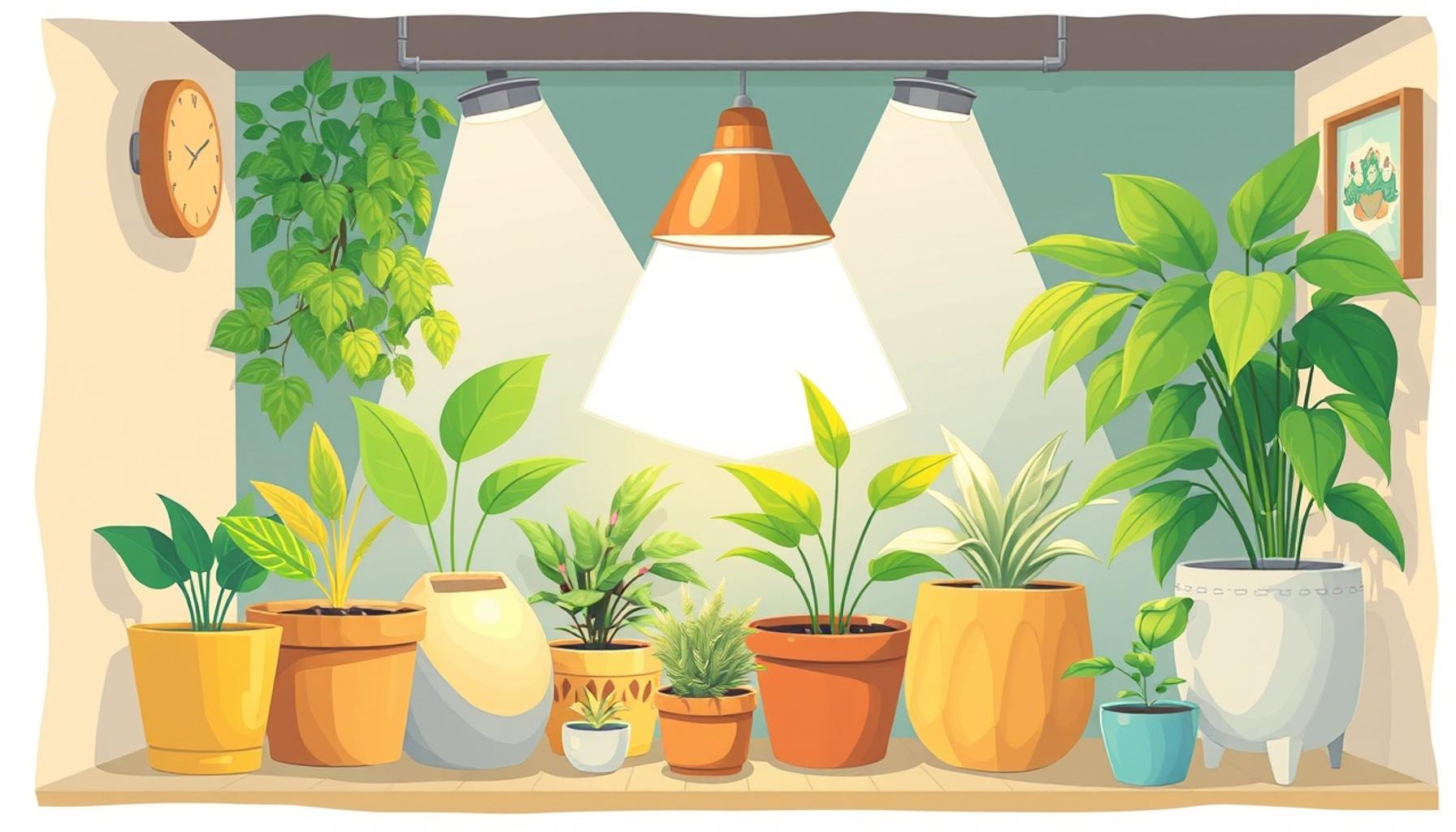
Another critical aspect of using artificial lighting effectively is the placement of your light sources. Proper positioning can make a remarkable difference in how well your plants utilize the light. Lights should be positioned so that they produce an even distribution of light coverage across your growing area. This may involve placing lights above plants or utilizing reflective surfaces to bounce light around.
Consider the height and type of plants you are growing. Taller plants might need lights positioned higher to avoid scorching, while shorter plants can benefit from closer light sources. Adjustable fixtures or hanging setups allow you to modify the distance as plants grow, ensuring they receive optimal light at each stage of development.
Additionally, reflectors can maximize light efficiency. Reflective materials such as Mylar or even white paint on walls can help scatter light effectively, increasing the overall light available to your plants without the need for additional fixtures. This combination of thoughtful placement and reflective surfaces can result in plants not just surviving but thriving in low-light settings.
Monitoring Plant Health and Light Effectiveness
While a good lighting setup sets the stage for growth, regular monitoring and adjustments based on plant responses are essential. Keep an eye out for signs of light stress, such as yellowing leaves or stunted growth, which can indicate insufficient light or too much intensity. Conversely, if leaves are scorched or discolored, it could suggest that the light is too close or too strong.
Utilizing equipment like a light meter can provide objective data on the amount of light your plants are receiving. This can help in fine-tuning light schedules and intensities based on the specific needs of your plants. Engaging in this proactive approach not only optimizes growth but also fosters a deeper understanding of the delicate interplay between light and plant health.
In summary, understanding the intricacies of light duration, placement, and monitoring can significantly enhance your success with artificial lighting techniques. By adapting these strategies, growers in low-light environments can maximize growth, ensuring vibrant, healthy plants that contribute positively to their indoor landscapes.
DISCOVER MORE: Click here for sustainable irrigation tips
Conclusion
In summary, artificial lighting techniques offer an invaluable solution for cultivating healthy plants in low-light environments. By understanding the nuanced interplay between light quality, duration, and placement, growers can effectively create optimal conditions that mimic natural ecosystems. Photoperiodism is a critical consideration; establishing the right balance of light and dark periods is essential to cater to the specific needs of various plant species. Furthermore, the strategic positioning of light sources and utilizing reflective materials can dramatically enhance growth, fostering a thriving indoor garden even in the most challenging lighting conditions.
As innovation in artificial lighting continues to evolve, with advancements like LED technology providing energy-efficient options, the potential for indoor horticulture remains vast. Growers should remain diligent in monitoring their plants, employing tools such as light meters to ensure they are fine-tuning their approach based on real-time feedback. By observing plant responses and adjusting lighting techniques accordingly, enthusiasts can cultivate not just resilient plants, but an enriching gardening experience.
Ultimately, exploring these artificial lighting strategies opens up a world of possibilities for gardeners in the United States and beyond. With patience and experimentation, the dream of a lush, vibrant indoor landscape is well within reach—regardless of natural light availability. Engaging with these techniques will not only enhance plant growth but also enrich the overall indoor environment, making every home feel more alive and connected to nature.

Linda Carter
Linda Carter is a writer specializing in gardening and growing at home for beginners. With extensive experience helping readers confidently care for plants, Linda shares practical guidance on preparing soil, choosing suitable plants, watering, planting, and maintaining home gardens. Her goal is to provide clear tips and accessible strategies that help beginners grow healthy plants and enjoy gardening in any space.