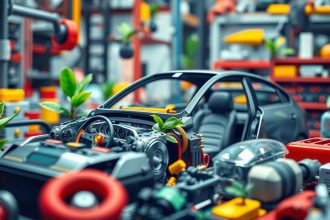

The Transformative Impact of 3D Printing in the Automotive Sector
In an era characterized by rapid technological advancements, the application of 3D printing in the automotive sector is carving out a new frontier in manufacturing and design. This innovative technology is revolutionizing how vehicles are produced, offering solutions that were previously unimaginable.
Cost Reduction is one of the most immediate benefits of integrating 3D printing into automotive manufacturing. Traditional manufacturing methods often involve extensive waste, as excess materials are discarded during the production process. With 3D printing, manufacturers are able to create components layer by layer, which dramatically minimizes material waste. For example, BMW has effectively employed 3D printing to produce numerous parts for their vehicles, leading to significant reductions in overall production costs.
Additionally, 3D printing facilitates faster production. The traditional supply chain can be time-consuming, often requiring several weeks from design to the delivery of parts. In contrast, 3D printing can drastically cut down this timeline. Companies like Volkswagen have embraced this technology to expedite prototyping processes, allowing them to test and iterate on designs almost instantaneously. This acceleration in production not only helps in faster rollouts of new models but also enables manufacturers to react swiftly to market demands.
Customization is another remarkable aspect of 3D printing that appeals greatly to consumers. Today’s customers are increasingly seeking personalized products that reflect their individual tastes. This technology allows for bespoke solutions, enabling automotive companies to offer tailored interiors or unique body modifications. For example, Tesla has begun experimenting with 3D printing to produce custom components that allow customers to personalize their vehicles right from the factory.
As industry leaders like Ford and General Motors delve deeper into 3D printing, we observe notable advancements that are pivotal for the industry’s future. The production of lightweight components not only enhances vehicle performance but contributes positively to fuel efficiency, aligning with the growing demand for eco-friendly products. On-demand manufacturing means that companies can produce parts as they are required, which efficiently reduces inventory costs. Such practices also diminish storage needs and streamline operations.
Moreover, enhanced design freedom is a significant advantage of 3D printing. It allows engineers and designers to explore intricate geometries that traditional manufacturing techniques might not accommodate. For example, the ability to create complex internal structures can lead to stronger and lighter components, pushing the boundaries of conventional design.
As we stand on the brink of a new era in automotive manufacturing, understanding the transformative capabilities of 3D printing is essential. It is clear that this technology is not merely a trend, but rather a profound shift that is reshaping the landscape of the automotive industry, making it more efficient, innovative, and responsive to consumer needs.
Unlocking Efficiency through 3D Printing Technology
The integration of 3D printing into automotive production is not just a fleeting trend; it signifies a seismic shift in how vehicles are conceived and manufactured. By leveraging this cutting-edge technology, automobile manufacturers can achieve remarkable cost savings and enhance their innovative capabilities. Central to this revolution is the notion of decentralized production, which empowers automakers by enabling them to localize production processes and significantly reduce logistics costs.
One of the standout advantages of 3D printing in the automotive industry is its power to reduce lead times. Traditionally, manufacturing a new part involves a long-winded process of design, prototyping, and mass production. However, with 3D printing, car manufacturers can create designs on-demand, which results in:
- Rapid prototyping: Designers can create multiple iterations of a design in days rather than weeks, facilitating faster decision-making and reducing time to market.
- Instant feedback loops: By iterating designs quickly, engineers can gather input from various stakeholders, ensuring that features align with consumer preferences.
- Streamlined testing: With the ability to produce functional prototypes rapidly, companies can conduct rigorous testing and refinement before committing to full-scale production.
Moreover, the flexibility of additive manufacturing allows for an unprecedented level of customization. Instead of producing a one-size-fits-all model, automotive companies can create tailored components to fit specific consumer needs. This trend is increasingly appealing in the U.S. market, where buying decisions are often influenced by individual preferences. Manufacturers are now able to produce parts that cater to the distinct tastes of consumers, exemplifying the shift toward personalized automotive experiences.
Another noteworthy aspect of 3D printing is its role in promoting sustainable practices within the automotive sector. By dramatically reducing waste through additive processes, manufacturers can contribute to a circular economy model. For instance:
- Material Efficiency: Parts are built precisely as required, which minimizes excess and reduces costs associated with raw materials.
- Lower Carbon Footprint: Localized production diminishes the need for long-distance transportation, subsequently cutting down greenhouse gas emissions.
- Recyclability: Many 3D printing materials can be recycled and reused in future projects, fostering an environmentally responsible manufacturing cycle.
As automakers embrace 3D printing, they effectively arm themselves with the tools needed to not only cut costs but also to innovate at an unprecedented pace. The move toward additive manufacturing is proving to be a crucial strategy for industry leaders aiming to stay competitive in an increasingly fast-paced market. The ability to produce lightweight components, quickly adapt designs, and respond to customer desires positions 3D printing as a key player in the automotive manufacturing landscape.
The Role of 3D Printing in Automotive Production: Reducing Costs and Accelerating Innovation
As the automotive industry continues to innovate, 3D printing emerges as a game-changing technology, significantly transforming production processes. One of the critical advantages of adopting 3D printing in automotive production lies in its ability to reduce costs. Traditional manufacturing methods often involve expensive molds and tools which can take time and massive investment to produce. With 3D printing, manufacturers can create intricate parts directly from CAD designs, drastically lowering the need for costly tooling and reducing waste. This not only mitigates production costs but also allows for rapid prototyping, leading to faster time-to-market.Additionally, 3D printing accelerates innovation by facilitating design freedom. Automotive engineers are no longer limited by conventional manufacturing constraints, enabling them to experiment with and refine designs with minimal risk and cost. This capability has led to the development of lighter, stronger components that enhance vehicle performance and efficiency. The integration of additive manufacturing in the automotive sector also supports sustainability efforts. By producing parts on-demand and using only the necessary materials, manufacturers can minimize excess inventory and reduce their environmental footprint.Manufacturers such as Ford and General Motors have begun incorporating 3D printing extensively in their production lines, recognizing its potential for not only improving efficiency but also fostering innovation. The opportunity to streamline operations while exploring new designs and materials positions 3D printing as a crucial aspect of future automotive advancements.To enhance understanding, here’s a clear overview of the advantages of 3D printing in the automotive sector through the table below:
| Category | Advantages |
|---|---|
| Cost Reduction | Eliminates expensive tooling and reduces production waste. |
| Design Flexibility | Allows for complex geometries and rapid prototyping of optimized parts. |
These factors illustrate how 3D printing is not only revolutionizing cost management but also paving the way for breakthroughs in automotive design and production efficiency. The implications of this technology will continue to unfold as more manufacturers invest in its potential, hence reshaping the overall landscape of the automotive industry.
Transforming Supply Chains and Enhancing Collaboration
Beyond the immediate benefits of cost reduction and rapid prototyping, 3D printing plays a crucial role in transforming automotive supply chains. Traditionally, the automotive industry relied on a complex web of suppliers to produce components, often leading to delays and inefficiencies. However, with the advent of additive manufacturing, manufacturers can forge new pathways for collaboration and resource allocation that significantly enhance efficiency.
One of the most fascinating developments is the ability for automakers to produce parts in-house, which minimizes dependency on third-party suppliers. This vertical integration allows for greater control over quality, timelines, and costs. For instance, companies like Ford and General Motors have begun incorporating 3D printing into their production lines to manufacture components such as brackets, fixtures, and tooling. This not only streamlines their operations but also reduces the need for extensive inventory management, as they can print parts as needed, just in time for assembly.
Furthermore, implementing 3D printing opens doors to new collaborative opportunities within the industry. Automakers can partner with tech companies specializing in additive technology to co-develop innovative applications that push the boundaries of design and functionality. For instance, Local Motors, known for their use of 3D printing, has successfully collaborated with engineers and designers worldwide to create vehicles like the Olli, an autonomous shuttle. This model exemplifies how collaborative efforts can harness technology to produce groundbreaking results.
In addition, the data generated through 3D printing processes can provide invaluable insights into operational efficiencies. By analyzing production data, automakers can identify bottlenecks and continuously refine their processes, ultimately leading to enhanced efficiency. This practice forms a core component of the Industry 4.0 movement, where interconnected technologies revolutionize traditional manufacturing paradigms.
Moreover, the role of 3D printing extends to the realm of spare parts and maintenance. With the capability to print on demand, automakers can dynamically meet customer needs and reduce downtime for vehicle repairs. This shift is particularly significant for older models and niche vehicles where replacement parts are often scarce. For example, BMW has implemented 3D printing solutions for their motorcycle division, producing spare parts as needed to serve their customers without the hassle of inventory constraints.
Innovative automotive companies are not just utilizing 3D printing in production but are also integrating it into design processes. The concept of creating a fully 3D-printed vehicle is slowly becoming a reality, characterized by the radical rethinking of materials and structures that could lead to a decrease in the overall weight of vehicles. This reduction in weight directly correlates with enhanced fuel efficiency and lower emissions, addressing sustainability concerns directly.
The rapid advancements in materials technology for 3D printing are also paving the way for stronger, more durable components that can withstand the rigors of automotive applications. Enhanced polymers, metal alloys, and composite materials are being developed and tested, enabling manufacturers to design components that meet rigorous safety and performance standards while benefiting from the efficiencies of additive manufacturing.
In sum, as 3D printing establishes itself more firmly within the automotive industry, it not only revolutionizes production methods but also redefines how companies collaborate, innovate, and create value. The move toward a more integrated and agile manufacturing process positions 3D printing as the cornerstone of future advancements in automotive technology.
Conclusion: The Future of 3D Printing in Automotive Production
In summary, the integration of 3D printing into automotive production is more than just a technological upgrade; it represents a fundamental shift in how vehicles are designed, manufactured, and maintained. As manufacturers embrace this innovative approach, the benefits of cost reduction, enhanced collaboration, and accelerated research and development become increasingly apparent. The ability to produce parts on demand not only streamlines supply chains but also enhances the overall quality and efficiency of manufacturing processes.
The transition towards vertical integration empowers automakers to take control of their production lines, reducing dependency on third-party suppliers and minimizing delays. Furthermore, partnerships between automotive companies and tech innovators foster an environment rich in creative solutions, leading to advancements such as lightweight structures that translate into improved fuel efficiency and reduced environmental impact. As the demand for sustainable vehicles grows, this capability becomes increasingly vital in addressing global concerns.
Moreover, the ongoing advancements in materials technology for 3D printing promise to deliver even stronger and more resilient components, paving the way for next-generation vehicles that meet stringent performance standards while maintaining cost-effectiveness. As we look ahead, it is clear that 3D printing will continue to play a crucial role in shaping the future of the automotive industry.
For those seeking to understand the broader implications of this technology, the exploration of 3D printing in automotive production opens a gateway to discovering a new era of manufacturing, where creativity meets practicality, underscoring the vital need for continuous innovation. As we move forward, staying abreast of these developments will be key for stakeholders at all levels of the automotive landscape.