
Understanding the Eisenhower Matrix
In today’s fast-paced world, keeping track of tasks can feel overwhelming for many individuals. With multiple responsibilities pulling us in different directions, prioritization becomes crucial for maintaining efficiency and reducing stress. Recognizing this need, former U.S. President Dwight D. Eisenhower developed a method that is still widely used today: the Eisenhower Matrix. By classifying tasks based on their urgency and importance, you can transform how you approach productivity.
How the Eisenhower Matrix Works
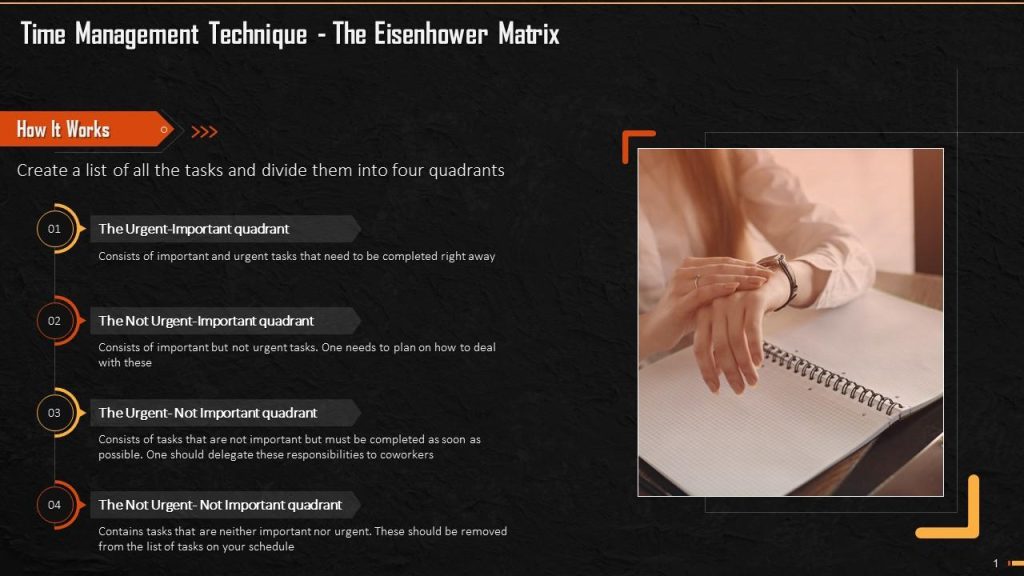
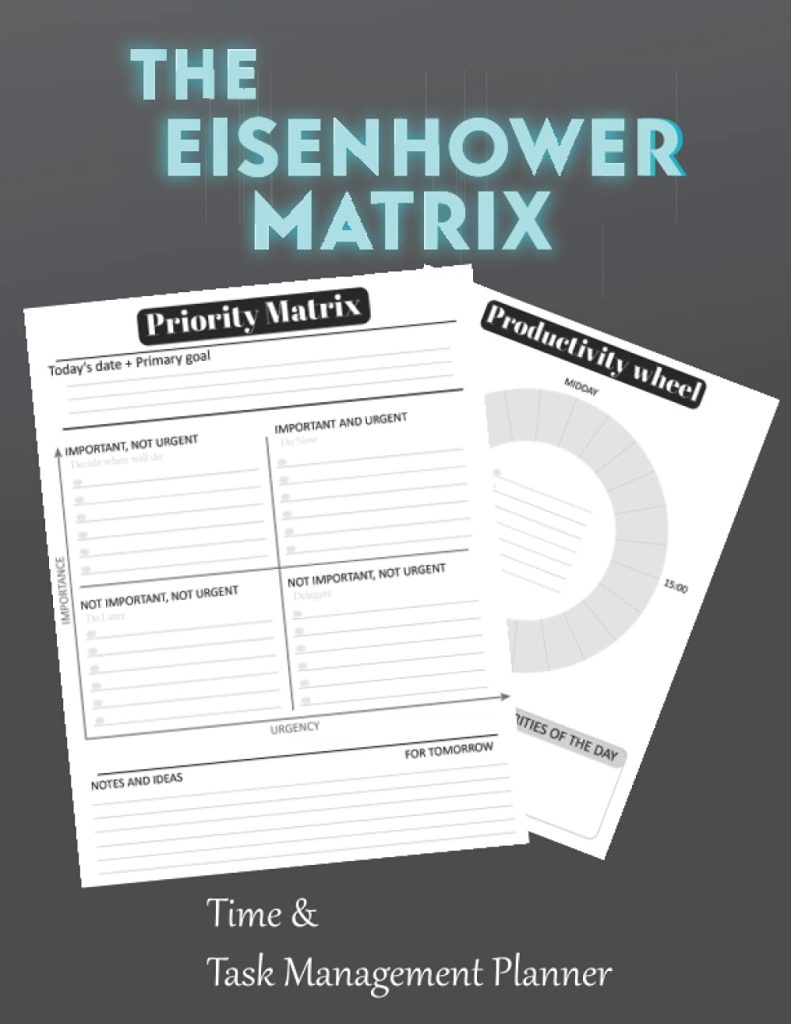
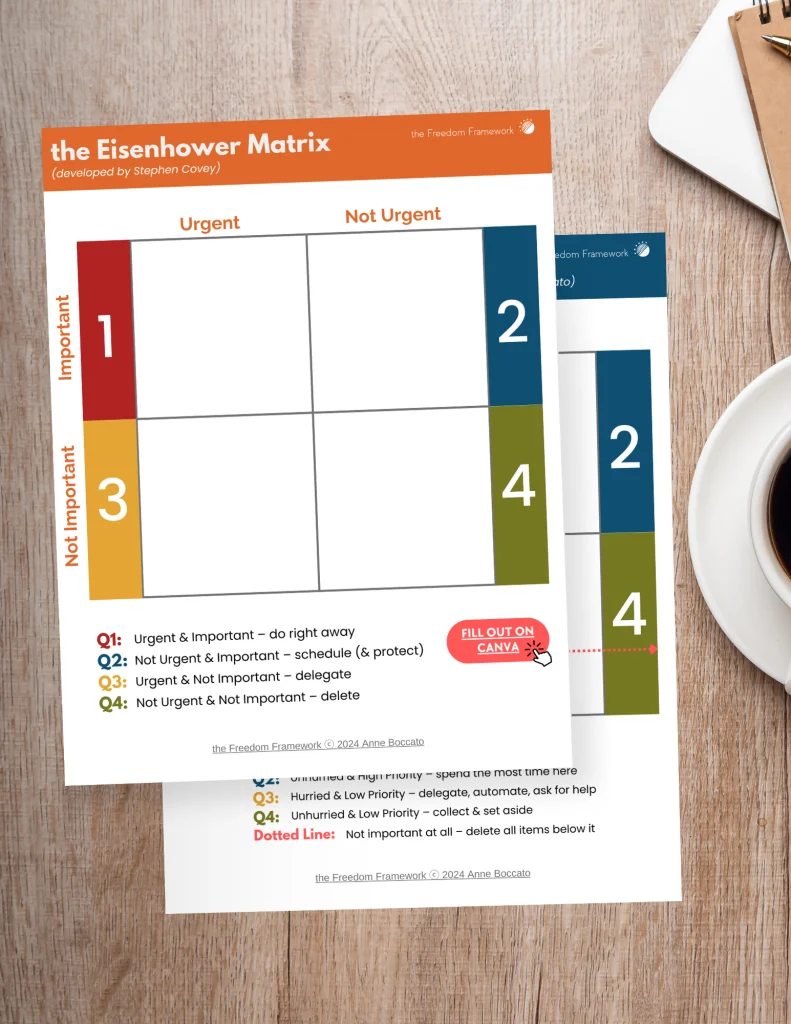
The Eisenhower Matrix consists of four quadrants that help you categorize tasks effectively:
- Quadrant I: This quadrant includes tasks that are both urgent and important, requiring immediate attention. For instance, submitting a project due tomorrow or handling a sudden crisis at work falls into this category.
- Quadrant II: Tasks categorized here are important but not urgent. These are activities you should schedule for later, such as planning your career development or creating strategies for a long-term project. Engaging in activities from this quadrant is essential for personal growth.
- Quadrant III: This quadrant is for urgent but not important tasks, which can often be distractions. Common examples include responding to non-critical emails or attending meetings that don’t align with your main objectives. These tasks are ideal candidates for delegation.
- Quadrant IV: Tasks falling into this category are neither urgent nor important, frequently leading to procrastination and distraction. Activities such as scroll through social media aimlessly or watching television instead of focusing on a pressing deadline belong here.
Benefits of Using the Eisenhower Matrix
By employing the Eisenhower Matrix, you enhance your ability to focus on what genuinely matters. It encourages intentionality in allocating your time and energy, ultimately leading to a better work-life balance. By dedicating less time to trivial distractions, you can significantly improve your productivity and direct your efforts toward meaningful tasks that help you achieve personal and professional goals.
Imagine cutting down the time spent on minor tasks and instead focusing on essential projects that drive progress in your career. Whether you are a busy professional meeting tight deadlines, a student juggling classes and assignments, or a small business owner striving for growth, mastering the Eisenhower Matrix can unlock your full productivity potential. Not only does it streamline decision-making, but it also fosters a sense of control in an often-chaotic environment.
Ultimately, the key to harnessing the power of the Eisenhower Matrix lies in consistent practice. By regularly assessing the urgency and importance of your tasks, you’ll cultivate the ability to prioritize effectively, leading to sustained productivity and less overwhelm in your daily life.
DISCOVER MORE: Click here for expert tips
Implementing the Eisenhower Matrix in Daily Routines
To maximize productivity using the Eisenhower Matrix, it’s essential to integrate this framework into your daily routines seamlessly. The effectiveness of this tool hinges on how consistently you apply it to your task management strategies. Here’s a step-by-step guide to help you implement the matrix in a practical way:
Step 1: Create Your Quadrants
Begin by sketching four quadrants on a sheet of paper or using a digital tool that you prefer. Label them:
- Quadrant I: Urgent and Important
- Quadrant II: Important but Not Urgent
- Quadrant III: Urgent but Not Important
- Quadrant IV: Neither Urgent nor Important
This visual representation is crucial for quickly categorizing tasks as they arise throughout your day.
Step 2: Evaluate Your Tasks
At the start of each day, or even the night before, take stock of your tasks. Write down everything you need to accomplish, no matter how small. After listing them, assess the urgency and importance of each task. Ask yourself:
- Is this task essential for my goals or deadlines?
- Does it require immediate attention?
- What are the consequences of not completing it today?
By answering these questions, you can correctly position each task within the appropriate quadrant.
Step 3: Prioritize Wisely
Once your tasks are arranged into quadrants, it’s time to prioritize. Focus on completing items in Quadrant I first, as they necessitate your immediate attention. However, make it a point to spend a significant portion of your day working on tasks in Quadrant II. These tasks may not scream for attention but contribute substantially to your long-term success and well-being.
For Quadrant III tasks, consider delegating them, whether by assigning them to a team member or setting boundaries to manage time spent on these tasks. Finally, make a conscious effort to limit activities categorized in Quadrant IV, allowing for a productive mindset.
Step 4: Review and Adjust
At the end of each week, take a moment to review how effectively you utilized the Eisenhower Matrix. Reflect on which tasks were correctly prioritized and which were not. Adjust your approach as necessary and experiment with different methods to categorize your tasks. This routine review will enhance your understanding of your own workflow and continuously refine your productivity-boosting strategies.
By actively engaging with the Eisenhower Matrix, you cultivate a structured approach to tackling your responsibilities. The insights gained through this practice reveal not only where to focus your efforts but also how to maintain a balanced workload that leads to task completion and personal satisfaction. As you become adept in this methodology, you’ll notice a significant shift in your productivity levels, ensuring your time is spent on what truly matters.
Understanding the Quadrants of the Eisenhower Matrix
To truly maximize productivity, one must first grasp the intricacies of the Eisenhower Matrix. This framework categorizes tasks into four distinct quadrants that help in prioritizing effectively.
Quadrant 1: Urgent and Important
Tasks that fall into this category are both time-sensitive and crucial for achieving your goals. These may include deadlines, crises, and significant projects. Approaching these tasks promptly can lead to higher efficiency and minimize last-minute stress.
Quadrant 2: Important but Not Urgent
This quadrant emphasizes planning and preparation. Here, you’ll find activities such as long-term projects and personal development tasks. Engaging in these important tasks builds the foundation for future success, leading to a sustainable productivity that can prevent burnout.
Quadrant 3: Urgent but Not Important
These are distractions that demand your attention but do not contribute significantly to your goals. Examples might include non-essential emails or team requests. Recognizing and delegating or eliminating these tasks can free up your schedule for more pressing matters.
Quadrant 4: Not Urgent and Not Important
Tasks here often serve as time wasters and should be minimized or removed from your to-do list altogether. This might include unnecessary meetings or excessive social media scrolling. Being aware of these activities allows you to focus more on what truly matters, enhancing your overall task management.
| Category | Advantages |
|---|---|
| Urgent & Important | Immediate focus leads to reduced stress and clearer deadlines. |
| Important but Not Urgent | Allows for strategic planning, promoting long-term success. |
By categorizing daily tasks using the Eisenhower Matrix, you can streamline decision-making, minimize wasted time, and enhance your overall productivity. Each quadrant serves as a valuable tool in honing your focus on what truly matters in both your professional and personal life.
DISCOVER: Click here to enhance your workspace
Enhancing Your Workflow with the Eisenhower Matrix
Integrating the Eisenhower Matrix into your life does not end with mere implementation; it encourages you to refine and enhance your workflow continually. As you become accustomed to this productivity tool, consider additional strategies to further capitalize on its effectiveness.
Leverage Technology
In today’s digital age, utilizing productivity apps that support the Eisenhower Matrix can significantly bolster your organization. Numerous applications, such as Todoist, Trello, and Asana, allow users to create custom boards with quadrants mirroring the Eisenhower approach. These tools not only help in visually organizing tasks but can also send reminders for urgent deadlines.
Moreover, integrating automation tools like Zapier or IFTTT (If This, Then That) can enhance your efficiency. For instance, you can automatically sort emails into relevant task quadrants based on keywords. This ensures tasks that fit the criteria of being urgent and important land where they need to be without added effort, freeing up mental space for deeper work.
Establish a Regular Review Schedule
Maximizing productivity through the Eisenhower Matrix also means regularly reassessing your tasks and their classifications. Setting aside time—even just 15 minutes at the end of each day or week—to review your quadrants can uncover patterns in how you are allocating your time. Are there tasks that seem to consistently fall into Quadrant I? If so, this signals a potential need to re-evaluate your planning and execution strategies for those tasks to avoid last-minute rushes.
- Focus on identifying recurring themes: Which tasks frequently emerge as urgent? Understanding this helps in planning and possibly avoiding future crises.
- Assess task delegation: Are there tasks in Quadrant III that could be delegated to free up your time for more essential projects?
This practice will not only assist in better time management but will also lead to a more sustainable workload.
Set Boundaries and Limit Interruptions
In an era of constant connectivity, protecting your time has never been more critical. The demand for your attention from colleagues, digital notifications, and even personal obligations can often blur the lines between what is truly urgent and what can wait. Setting clear boundaries around your work time may involve:
- Designating specific hours for deep work—this is time you devote solely to Quadrant I and II tasks.
- Communicating your availability to colleagues, thereby minimizing interruptions during your focused work sessions.
- Utilizing apps that block distracting websites or social media, allowing you to concentrate fully on your tasks.
By limiting distractions, you protect your mental energy for high-priority tasks, thus enhancing efficacy in your work.
Encourage a Team Culture Around Task Prioritization
If you are part of a team, introducing the Eisenhower Matrix into your group’s workflow can vastly improve not only productivity but also team collaboration. Encourage team members to utilize the matrix when formulating their own tasks or projects. Regular check-ins on task prioritization can align objectives and ensure that everyone is focused on shared goals.
In creating a culture where prioritization becomes a collective effort, you foster an environment that values transparency and clarity, paving the way for greater achievements and shared success.
Incorporating the Eisenhower Matrix effectively is a continuous journey—one that demands the willingness to evolve your approach as your commitments and challenges change over time. By arming yourself with the right tools, techniques, and practices, you empower yourself to reach exceptional levels of productivity and fulfillment.
DON’T MISS: Click here to enhance your work-life balance
Conclusion: Embrace the Eisenhower Matrix for Productivity Mastery
In an increasingly hectic world, mastering productivity becomes not just an ambition but a necessity. The Eisenhower Matrix offers a powerful framework to help individuals and teams prioritize tasks effectively and focus their energies on what truly matters. By separating tasks into four distinct quadrants, you gain clarity on what is urgent versus what is important, guiding your decisions on where to invest your time.
As you adopt the matrix, remember that its true potential lies in continuous improvement. Regularly reviewing your task classifications can unveil patterns that may need addressing, allowing for improved planning and execution. Leveraging technology—whether through productivity apps or automation tools—can enhance your organization and ensure you maintain the momentum toward your goals without added burden.
Moreover, fostering a culture of prioritization within teams not only aligns objectives but encourages collaboration and shared responsibility. As you set clear boundaries to minimize interruptions, you protect your focus, thereby enhancing your capacity to tackle high-priority tasks effectively.
Ultimately, productivity is a journey, and the Eisenhower Matrix serves as a compass, helping you navigate through your workload toward greater achievement and fulfillment. Embrace this tool, and watch as your ability to maximize productivity transforms both your professional and personal life.