
Mastering Project Planning for Maximum Efficiency
In the increasingly busy landscape of modern work life, it can often feel like there are not enough hours in the day. As we juggle multiple projects, impending deadlines, and everyday responsibilities, creating an efficient project plan is no longer just beneficial; it is essential. The way you manage your tasks can significantly impact your productivity and well-being. Two innovative techniques that stand out in enhancing work efficiency are task batching and the Eisenhower Matrix.
Understanding and incorporating these strategies into your daily routine can dramatically change how you approach your workload. These are not merely trending concepts; they are cornerstone methods employed by high-achieving professionals across diverse fields. By mastering these techniques, you can:
- Reduce distractions and foster a focused environment, allowing you to zero in on high-priority activities.
- Enhance time management by consolidating similar tasks, ultimately making your workflow more seamless.
- Make better decisions about the urgency and importance of tasks, helping you allocate your resources more wisely.
Task batching is anchored in the idea of grouping similar tasks together to limit the mental strain of constant switching between different activities. For instance, if you handle emails, scheduling meetings, and brainstorming new ideas all at once, you may find yourself feeling overwhelmed and less efficient. However, if you allocate a specific block of time to handle emails, followed by dedicated time for meetings, and then set aside time for creative thinking, you will find a more coherent rhythm to your workdays. This not only speeds up the completion of tasks but also elevates the quality of your output.
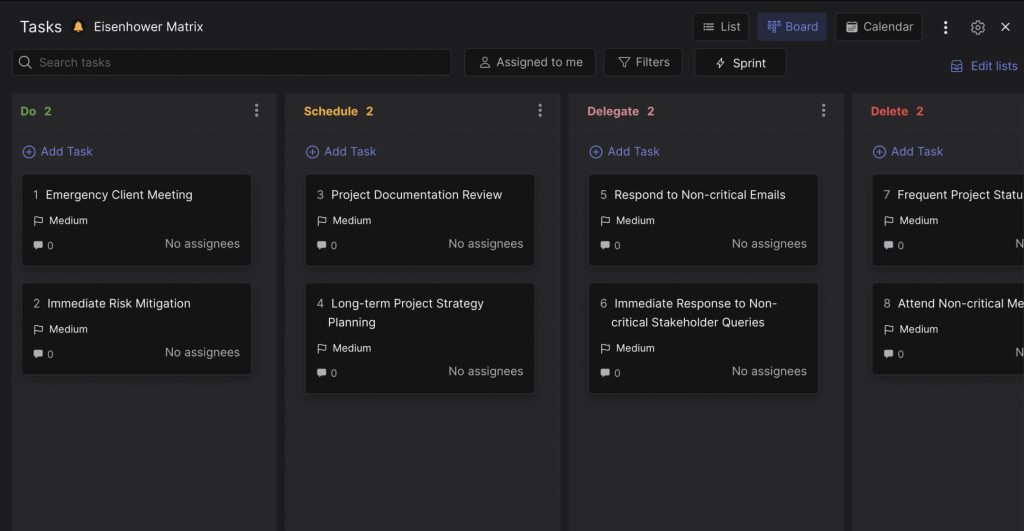
On the other hand, the Eisenhower Matrix offers a distinct method to prioritize tasks based on two key criteria: urgency and importance. The matrix divides tasks into four quadrants, allowing you to classify them as follows:
- Urgent and Important (do these first)
- Important but Not Urgent (schedule these for later)
- Urgent but Not Important (delegate if possible)
- Not Urgent and Not Important (eliminate or postpone)
This framework encourages making thoughtful decisions rather than reactive ones, enabling you to allocate your time to what truly matters. Imagine the relief of keeping your inbox clear, meeting all deadlines without stress, and still having time to innovate. Adopting the right project planning techniques presents a path toward unlocking your potential, allowing you to stay ahead in your professional journey.


By implementing task batching and utilizing the Eisenhower Matrix, you can restructure your approach to work, embracing efficiency while reducing overwhelm. Take the time to explore these strategies and witness how they can not only reshape your working habits but also fundamentally enhance your productivity and workplace satisfaction.
DISCOVER MORE: Click here to enhance your work-life balance
Leveraging Task Batching for Enhanced Focus
To understand the power of task batching, it is important to first recognize the implications of multitasking on productivity. Numerous studies reveal that switching between tasks can decrease productivity by as much as 40%. This staggering statistic underscores the need for a strategic approach to managing daily responsibilities. By consolidating similar tasks into a defined time block, professionals can maximize focus and performance.
When implementing task batching, the key is to identify tasks that share common characteristics or require similar skills. For example, if you are a marketing professional, consider batching tasks related to content creation, such as writing blog posts, creating social media updates, and developing marketing emails. Allocating dedicated time slots for these specific tasks allows your brain to enter a “flow state,” where creativity and focus are heightened.
Here are effective steps to implement task batching in your workflow:
- Identify Tasks: Start by listing out your recurring tasks and categorizing them based on similarities.
- Create Time Blocks: Allocate specific periods in your calendar for each batch. For instance, reserve Monday mornings for administrative tasks and Wednesday afternoons for brainstorming sessions.
- Limit Interruptions: During your batching sessions, minimize distractions by turning off notifications and setting boundaries with colleagues.
- Evaluate and Adjust: After a few weeks, assess the effectiveness of your task batching strategy. Make adjustments as necessary to enhance efficiency.
Prioritizing with the Eisenhower Matrix
While task batching lays the groundwork for a focused workflow, the Eisenhower Matrix provides a robust framework for task prioritization. Developed by President Dwight D. Eisenhower, this decision-making tool helps individuals distinguish between what is urgent and what is important—a crucial skill in a world overflowing with tasks competing for your attention.
Applying the Eisenhower Matrix involves categorizing tasks into four quadrants, facilitating informed decision-making regarding task management. Here’s a closer look at each quadrant:
- Urgent and Important: These tasks require immediate attention. Typically, they relate to deadlines and critical projects.
- Important but Not Urgent: These tasks contribute to long-term goals but can be scheduled for a later time.
- Urgent but Not Important: Tasks in this quadrant can often be delegated to others, freeing up your time for more significant activities.
- Not Urgent and Not Important: These are distractions that can be eliminated or postponed, enabling you to concentrate on higher-priority tasks.
By effectively employing the Eisenhower Matrix, professionals can reduce procrastination and enhance their focus on what truly drives success. Imagine entering the office each day with a clear vision of your priorities—free from the chaos of reactive decision-making. The combination of task batching and the Eisenhower Matrix not only aids in reclaiming control of your workflow but also ensures that your efforts are aligned with your overarching goals. Through deliberate planning, you can cultivate an environment where productivity flourishes.
| Advantages | Key Features |
|---|---|
| Enhanced Focus | By using task batching, individuals can zero in on similar tasks without frequent interruptions, ultimately boosting productivity and effectiveness. |
| Prioritization of Tasks | The Eisenhower Matrix helps in categorizing tasks based on urgency and importance, streamlining decision-making and ensuring you work on the right tasks first. |
The integration of the Eisenhower Matrix into your workflow enhances project planning by allowing the efficient handling of tasks. Rather than becoming overwhelmed by a lengthy to-do list, you can start to visualize which tasks demand immediate attention and which can be scheduled for later. This strategic approach helps mitigate stress and maximizes time management, making it a vital tool for anyone looking to master project planning.Moreover, the combination of task batching with the Eisenhower Matrix not only increases productivity but also promotes better work-life balance. When you group similar tasks, it paves the way to complete them efficiently, giving you more time to focus on high-impact projects. Delving deeper into the principles of project planning mastery opens doors to richer insights and practical strategies, encouraging individuals and teams alike to produce outstanding results.
DISCOVER MORE: Click here to enhance your productivity
Integrating Task Batching and the Eisenhower Matrix for Peak Productivity
Having established the individual strengths of task batching and the Eisenhower Matrix, the next step is to explore how these two methodologies can be seamlessly integrated for an even more powerful approach to productivity. The synergy created when combining these techniques can help you navigate a bustling work environment, enabling you to focus on high-impact activities while minimizing time wastage.
Integrating task batching with the Eisenhower Matrix begins with the critical step of prioritization. As you categorize tasks using the matrix, you can assign those within the Urgent and Important and Important but Not Urgent quadrants to focused batching sessions. The idea is to dedicate specific time blocks to tackle these tasks without the constant switching that typically leads to burnout.
For instance, if you identify several tasks within the Important but Not Urgent quadrant—say, developing a new marketing strategy or working on a long-term client proposal—consider batching them into a single time block each week. This method allows you to delve into deep work, fostering creativity and strategic thinking. Your schedule may look like this:
- Monday Morning: Brainstorming and strategy development.
- Wednesday Afternoon: Drafting proposals and perfecting presentations.
By creating a rhythm in your workflow, you can leverage the focused mindset that arises from batching while ensuring that you are working on tasks that align with your priorities. In turn, this enhances your capacity to respond effectively to the more immediate demands of Urgent and Important tasks. For example, if a pressing client meeting arises, you’ll find that you have already allocated time to refine your presentation while still being able to adjust your focus to meet the urgent deadline.
Employing Technology to Reinforce Productivity
In this digital age, there are numerous tools and applications that can aid in implementing both task batching and the Eisenhower Matrix. Software such as Trello, Asana, or Todoist allows you to create structured to-do lists that can prioritize tasks visually, while also enabling you to batch similar tasks into designated categories. This incorporates visual cues into your workflow, making it easier to stay on track.
Furthermore, consider utilizing calendar applications like Google Calendar to designate specific time slots for each batch. By visibly blocking off time on your calendar, you create a commitment not just to yourself but to colleagues, reducing the chances of interruptions. For added accountability, integrate tools like Focus@Will or Pomodoro timers to maintain focus during your batching sessions.
Measuring Progress and Adjusting Your Strategy
Ultimately, understanding that productivity is not a one-size-fits-all scenario is crucial. Different professionals may find varying success with distinct techniques. Regularly review and measure the effectiveness of your combined task batching and Eisenhower Matrix approach. Ask yourself:
- Are my urgent priorities truly aligned with what I perceive as important?
- Have I maximized my focus during batching sessions?
- Are there tasks that may no longer require the same level of urgency or importance?
This reflective practice will help you fine-tune your workflow, avoiding stagnation and promoting continuous improvement. By integrating the strengths of task batching and the Eisenhower Matrix, you position yourself to not only work efficiently but also to achieve a deeper satisfaction in your daily accomplishments. Embrace this mastery in project planning, and watch as your productivity soars to new heights.
DIVE DEEPER: Click here to learn more
Final Thoughts on Project Planning Mastery
In our increasingly fast-paced professional landscape, mastering project planning is essential for achieving both individual and organizational success. By effectively integrating task batching with the Eisenhower Matrix, you harness a robust framework that enhances focus, prioritizes effectively, and maximizes productivity. The ability to categorize tasks based on urgency and importance not only streamlines your workflow but also empowers you to concentrate on high-impact projects that drive results.
Moreover, the seamless integration of technology into these methodologies serves as a vital ally in the pursuit of efficiency. Tools like Trello and Asana can elevate your project management practices, providing visual cues that enhance organization. By committing your time to focused batching sessions and utilizing calendar applications to carve out dedicated slots for these tasks, you create a structured yet flexible approach to managing workloads. This dual strategy encourages a proactive rather than reactive mindset, allowing you to adapt to the ever-changing demands of your role.
Ultimately, productivity is a personal journey; it requires ongoing evaluation and adjustment to align with specific goals and work styles. By committing to a regular review of the effectiveness of your approach, you can fine-tune your strategies and ensure continuous improvement. Embrace the principles of task batching and the Eisenhower Matrix as foundational elements of your project planning and witness firsthand the profound impact they can have on your workflow. As you refine these practices, you will not only achieve efficiency but also cultivate a fulfilling work environment that inspires creativity and satisfaction.